Industry has always been a pillar of growth for global markets, but it's also a driving force behind technological development. Nowadays, the continuous and rapid progress of automation is giving a new dimension to industrial production, setting the bar ever higher. At the same time, the dynamics of artificial intelligence and the rapid spread of digital technology, also known as Industry 4.0, are fundamentally changing the way products are designed and factories are organized. However, this path is far from smooth, as market pressures, supply chain uncertainty, and staff shortages pose major obstacles.
Challenges of modern industry
Managing the supply chain is one of the biggest challenges. The international division of production, the need for raw materials, and market demand create constant fluctuations. Especially in times of crisis, such as during the pandemic, supply chain difficulties have skyrocketed. Problems in coordinating different suppliers, delays in transport, and increases in fuel prices are intensifying economic pressure. To respond, many companies are implementing more flexible models and seeking closer partnerships (reshoring or nearshoring).
Despite the fact that the younger generation shows interest in technology, there is a structural shortage of personnel in the industrial sector. Companies are looking for skilled workers to operate advanced technologies, such as robotic systems and management software. The gradual retirement of existing staff and the inability to replace them in sufficient numbers is affecting productivity. As a result, new incentives, training programs, and retraining opportunities are constantly being sought to bridge the skills gap.
There are many instances when the market is affected by constant turmoil due to economic instability or geopolitical events. The volatility of raw material prices, tariffs on international trade, and general economic trends directly affect industrial production. Industries are required to adapt their strategies with flexibility and speed, which requires strategic planning and a realistic perspective on sustainable development.
Opportunities and new technologies
Despite the difficulties, the industry is opening the door to a wealth of opportunities for those who can innovate. Technological innovations create prospects for growth and diversification in an environment that is both demanding and full of potential.
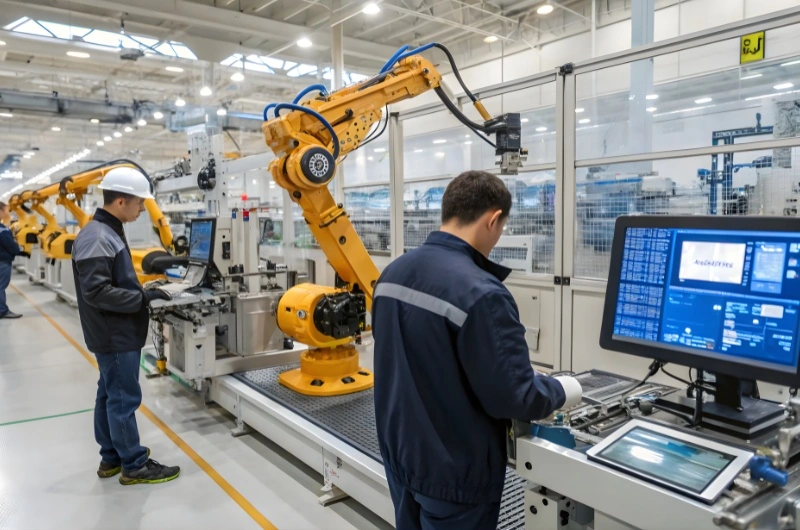
Automation is no longer limited to individual production lines. Today, robots are used throughout the entire chain, from sorting materials to assembling finished products and warehouse management. According to the International Federation of Robotics (IFR), the number of robots in industry is growing steadily every year, creating new applications and reducing production costs. In addition, robotic technology provides accuracy, reduces margins of error, and speeds up productivity.
The era of Industry 4.0 brings a complex ecosystem that combines information technology, engineering, artificial intelligence, and real-time data. By adopting digital transformation solutions, industries can identify weaknesses in their workflows, improve product design, and achieve increased interoperability between different units. For example, data analytics enables predictive maintenance based on real data, reducing downtime and stabilizing performance on a daily basis.
Artificial intelligence plays a key role in areas such as demand analysis, production optimization, and even automated decision-making. Machine learning systems can predict market trends, adjust the production process according to demand, and optimize energy consumption. This combination of machine learning and industry opens up new horizons for more “intelligent” factories.
In a world that is constantly shifting towards a green economy, sustainable development is emerging as a dynamic and essential element. Industry must adapt to strict environmental regulations and social demands to reduce its energy footprint. Designing “green” production processes with environmentally friendly practices is no longer a luxury but an urgent necessity. Investing in renewable energy sources, recycling methods, and reducing greenhouse gas emissions promotes a more sustainable and competitive model.
Product design and innovation
Consumer demands are constantly evolving. The approach to product design must incorporate end-user awareness as well as the need for rapid customization. Innovation in the industry also involves ongoing dialogue with the market, where the emphasis is not only on mass production, but also on the creation of specialized, personalized products. Even smaller companies can take advantage of modern CAD/CAM systems, creating high-quality models quickly and efficiently.
Strategies for addressing challenges
To maintain their position in such a competitive field, industries will need to adopt integrated approaches and long-term tactics.
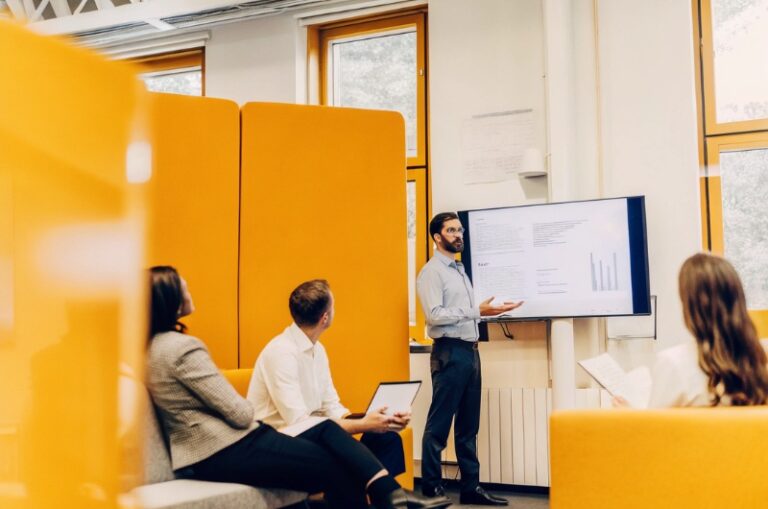
Addressing staff shortages requires extensive investment in employee skills. Educational platforms and programs related to robotics, artificial intelligence, and business management can fill knowledge gaps and contribute to a more integrated and productive culture.
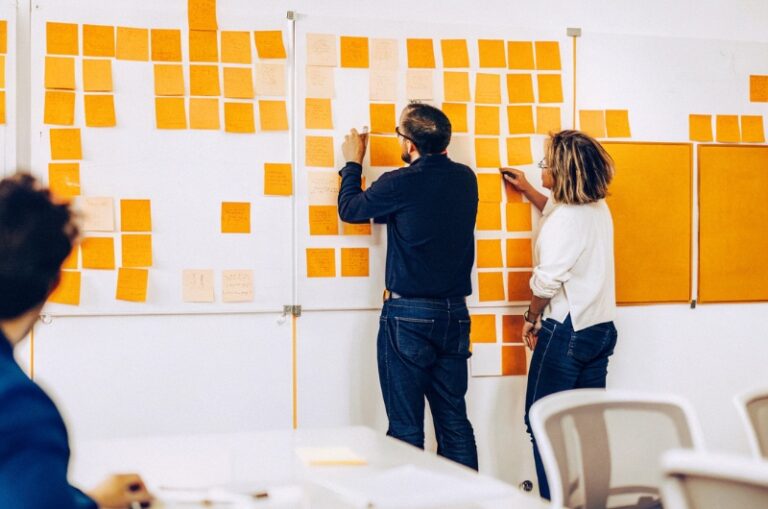
In the context of Industry 4.0, companies no longer operate in isolation. Organizations from different sectors collaborate, exchange knowledge and resources, and create ecosystems that facilitate innovation. Whether through joint venture programs or open innovation initiatives, collaboration leads to faster adaptation and better supply chain management.
The industry is now called upon to implement flexible practices in order to cope with rapid changes in demand and market crises. Flexible production lines, real-time analytics platforms, and digital communication tools help reduce costs and speed up response times. A factory that can adapt to new circumstances has a clear advantage over the competition.
Not only industry, but also the global economy as a whole, seems to have entered a new phase where technological progress goes hand in hand with constant market changes and environmental awareness. Thanks to automation, artificial intelligence, and Industry 4.0 developments, industry has the potential to minimize the impact of staff shortages and respond to the most demanding challenges of our time. However, success depends not only on equipment but also on the human ability to collaborate, learn, and lead change. In this context, sustainable development and innovation in industry are not only a competitive advantage but also a social responsibility for any business that wants to be present in the future.
Sources of Information: https://www.designnews.com/automation/industry-voices-manufacturing-straddles-challenges-and-opportunities






 English