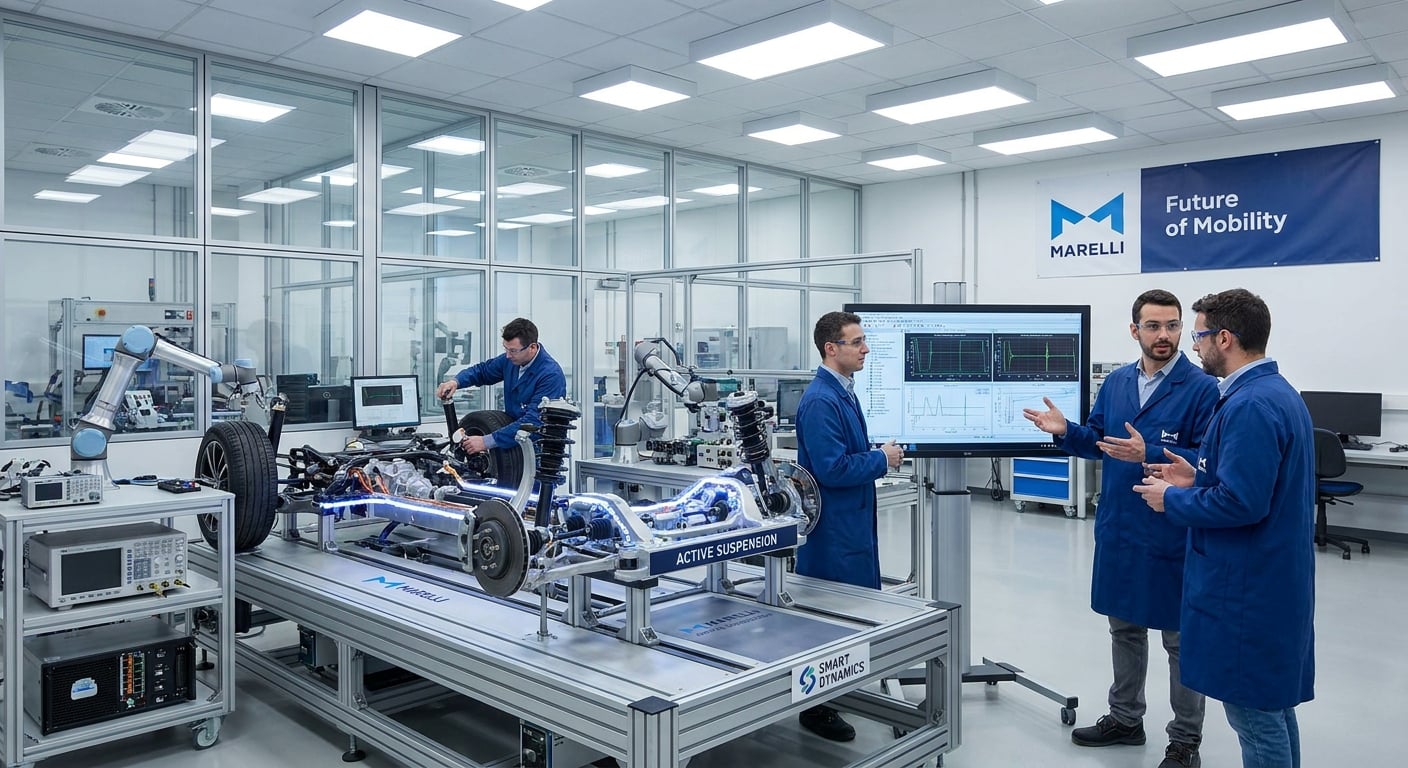
Electric cars, active suspension and the new lesson for e-shops
The news surrounding Marelli’s active suspension technology, as presented in DesignNews, is not just for automotive engineers or automotive suppliers. It is also of direct concern to e-shop owners, especially those who want to build a more mature, more premium and more data-driven online store. Marelli is moving in a direction where hardware, software, sensors and end-user experience work as a single system. This is exactly the point that every e-commerce owner should pay attention to: the product alone is no longer enough. What sells is the total experience, the sense of control, personalization and friction reduction at every stage of the customer journey.
Electric cars have accelerated this transition, because they are high-value products, intensely digital and deeply connected to data. Active suspension is not just a component that makes driving more comfortable. It is an example of how a technology can perceive the environment, adapt in real time and change the user experience without the user having to do anything. For an e-shop, the equivalent is a store that «reads» the visitor, understands their intent, adapts content, filters, recommendations, payments and aftersales, so that the purchase becomes smoother, safer and more convincing.
The electric car market illustrates why this conversation is important. According to the International Energy Agency, global sales of electric cars have grown from about 3 million in 2020 to nearly 14 million by 2023. This growth is not just about mobility; it is a sign that consumers are accustomed to buying, comparing, and evaluating products where software, connectivity, service, and ongoing upgrades play a huge role. As the chart below shows, the category is growing at a pace that is affecting the entire retail ecosystem.
What Marelli does differently and why it is valuable for e-commerce
At the heart of the technology presented by Marelli is the idea of active suspension management. Instead of the vehicle reacting passively to road irregularities, a sophisticated system can use electromechanical components, sensors and controllers to reduce body movements, improve comfort and support better handling. For the automotive industry, this is directly linked to software-defined vehicles, i.e. vehicles where much of the value is determined by software, algorithms and continuous improvement. For electric cars, such solutions are even more critical, because quiet operation, battery weight and high driver expectations make ride quality more apparent.
For an e-shop, the translation is simple: the customer does not see the store's "postings", but feels them. What is posting in an online store? It is the loading speed, the clarity of product data, the accuracy of filters, the ease of checkout, the reliability of deliveries, clear returns, the right personalization and the consistency between advertising, landing page, product and aftersales. When all this works, the customer feels that the market "flows" naturally. When they do not work, every small obstacle looks like a pothole in the road.
Herein lies the strategic lesson: technology should not be communicated only as a feature, but as an experience. Marelli is not just selling a mechanical component; it is supporting a promise of better driving. Similarly, a brand should not just sell «shoes,» «cosmetics,» «spare parts,» or «gadgets.» It should sell certainty of choice, ease of purchase, and reliability after payment. This is especially true for e-shops with premium positioning, where the customer is not only paying for the product, but for the confidence that he will not waste time, money, or mental energy.
From automotive technology to customer experience
Automotive technology is evolving towards systems that react in real time. A vehicle can leverage data from the road, speed, weight, driver behavior and the environment. E-commerce has a similar capability: search data, browsing history, products added to cart, abandoned checkouts, purchase frequency, customer acquisition channels and support messages. The difference between a mediocre and a mature e-shop is whether this data remains scattered or is transformed into decisions.
According to McKinsey, 711% of consumers expect personalized interactions from companies, while 761% are disappointed when they don’t. These numbers are especially important for e-commerce stores investing in conversion rate optimization, because they show that personalization is not a luxury. It is now a basic expectation. Just as an active suspension adjusts the behavior of a car on the road, an online store must adjust the experience to the visitor, their stage of intent, and their level of trust.
Consumers
Awaiting personalization
71
They get disappointed when it's missing.
76
In practice, this means that personalization must move from the level of «hi, Mary» in the email to the level of meaningful service. If a visitor repeatedly sees products in a category, the e-shop can display a selection guide, feature comparison or best sellers based on real needs. If a customer buys consumables every 45 days, the store can send a helpful reminder before they run out. If someone is reviewing a high-value product, the page should reduce risk with guarantees, reviews, technical information, live chat and a clear return policy. This is the e-commerce version of active posting: you don’t wait for the customer to «shake up» to fix the problem, you anticipate it.
The cost of friction: cart, checkout and trust
If Marelli shows how technology reduces vibration when driving, the Baymard Institute shows how expensive e-shops pay for «vibrations» at the checkout. The average cart abandonment rate recorded by Baymard is 70.19%. This does not mean that every abandonment is a failure, because many users are simply comparing or are not ready to buy. But it does mean that there is huge room for improvement in areas that are often considered technical details: shipping costs that appear slowly, mandatory account creation, unclear delivery times, limited payment methods, forms with many fields and a lack of trust.
Quota
Integrated shopping
29.81
For the e-shop owner, the message is practical: checkout is not just the last step of the purchase, it is the point where the entire brand promise is tested. If the advertising promises convenience, but the checkout requires ten steps, there is inconsistency. If the product page presents a premium image, but the payment seems sketchy or insecure, the premium positioning is undermined. If aftersales is not clear, the customer may abandon even after they have decided they want the product. In other words, the experience should be designed as a single system, not as the sum of separate tools.
The same goes for omnichannel retail. A customer can see a product on Instagram, enter the site from mobile, ask something in chat, return from Google Search, compare prices and finally buy from desktop. If the e-shop does not connect these dots, the customer feels that each channel treats them like a stranger. In contrast, when there is consistency in content, availability, price, service and communication, the experience acquires the fluidity that well-designed technological systems have.
Step-by-Step guide for e-shops that want a more "active" experience
Step 1: Map the vibrations of the experience
Start with a complete mapping of the customer journey, from first visit to repurchase. Don’t settle for generic sales metrics. See where users leave, what filters they use, which pages have high bounce rates, which products are frequently added to cart but not purchased, which questions are repeated in support, and which points create uncertainty. If you sell highly technically complex products, such as spare parts, devices, equipment, or B2B products, product data should be a priority. Descriptions, compatibilities, dimensions, materials, warranties, certifications, and photos aren’t just SEO content; they’re risk mitigation mechanisms.
Step 2: Turn data into interventions
Once you’ve identified the pain points, link each issue to a specific intervention. If users are abandoning on the shipping page, show costs and delivery times earlier. If they’re searching for terms that don’t return results, improve internal search and synonyms. If they frequently purchase products that require consumables or complementary items, create bundles and smart suggestions. If ad traffic is converting poorly, check if the campaign message aligns with the landing page. The logic is the same as active posting: you don’t make changes because «something sounds good,» but because the data shows where adjustments need to be made.
Step 3: Build trust before asking for it
Trust is not created at the end, at the moment of payment. It is created from the first contact. An e-shop that wants to stand out in demanding markets must have clear policies, visible contact details, fast support, authentic reviews, secure payments, detailed guides and consistent branding. Especially in categories related to mobility e-commerce, spare parts, technology or expensive products, the customer needs confirmation that he is making the right choice. Comparison tables, FAQs, video demos, compatibility guides and product selection tools are very helpful here.
How to leverage the connected car trend in your marketing strategy
Connected cars and electric cars are changing the way consumers perceive ownership. The user does not simply buy a product and the relationship with the brand ends. They expect updates, services, aftersales, preventive support, spare parts, accessories, subscriptions and continuous improvement. This model can be applied to many e-shops, even if they do not belong to the automotive sector. A cosmetics store can work with replenishment reminders. A hardware store can create a maintenance cycle. A fashion brand can suggest styling based on previous purchases. A B2B e-shop can enable account-based price lists and personalized reorder lists.
The key is to stop e-commerce strategy being limited to the question «how do I get more traffic?» Traffic is fuel, but experience is the suspension, steering, and braking system all in one. If the system is not properly configured, more traffic simply leads to more waste. On the contrary, when the store has a clean architecture, the right content, strong trust, automation, useful personalization, and reliable aftersales, then every marketing channel performs better. SEO brings in more qualified visitors, paid media converts better, email has higher value, and retention becomes a real driver of profitability.
The Marelli example shows that innovation wins when it links technical excellence with a clear human benefit. No driver is truly interested in every tiny detail of the suspension system if they don’t understand that they will travel more comfortably, more steadily and more quietly. No e-shop customer is interested in how many plugins, automations or integrations you use if they don’t feel that they can find what they want faster, buy without stress and be served without hassle. This is the essence: electric cars, active suspension and modern e-commerce meet on the same principle, that technology is only valuable when it makes the experience noticeably better.
Sources: DesignNews – Marelli Active Suspension Technology, Marelli, International Energy Agency – Global EV Outlook 2024, McKinsey – The value of getting personalization right, Baymard Institute – Cart Abandonment Rate Statistics
Frequently Asked Questions (FAQs)
How does Marelli's active suspension affect the user experience in electric cars?;
Marelli's active suspension uses sensors and electromechanical components to adapt the ride in real time. This improves comfort and control, offering a smoother and safer experience for the driver.
What is the importance of personalization in e-commerce?;
Personalization in e-commerce improves the user experience, increasing engagement and sales. Consumers expect customized interactions, and when they are lacking, they are often disappointed.
How do electric cars affect e-commerce?;
Electric cars, as high-value, digitally connected products, are redefining consumer expectations. This is impacting e-commerce, where consumers now demand integrated and personalized shopping experiences.
What role does checkout play in the success of an e-shop?;
Checkout is critical to the success of an e-shop, as it is the point where customer trust is tested. Simple and secure payment processes reduce cart abandonment and enhance the user experience.
How can an e-shop reduce friction in the user experience?;
An e-shop can reduce friction by improving loading speed, ease of checkout, and accuracy of product information. Consistent communication and clear return policies build customer trust.
How does automotive technology connect to customer experience in e-commerce?;
Automotive technology, such as active suspension, shows how real-time responsive technologies can improve the user experience. In e-commerce, this means adapting to customer needs based on data and personalization.
What is the strategic lesson from Marelli's e-shop technology?;
Marelli’s technology shows that technology must deliver a complete user experience, not just features. For e-shops, this means selling trust, convenience and reliability, beyond the product itself. What is the importance of personalization in e-commerce?Personalization in e-commerce improves the user experience, increasing loyalty and sales. Consumers expect customized interactions, and when these are missing, they are often disappointed. How are electric cars impacting e-commerce?Electric cars, as high-value and digitally connected products, are redefining consumer expectations. This is impacting e-commerce, where consumers now demand complete and personalized shopping experiences. What role does checkout play in the success of an e-shop?Checkout is critical to the success of an e-shop, as it is the point where customer trust is tested. Simple and secure payment processes reduce cart abandonment and enhance the user experience. How can an e-shop reduce friction in the user experience? An e-shop can reduce friction by improving loading speed, ease of checkout, and accuracy of product information. Consistent communication and clear return policies build customer trust. How automotive technology connects to customer experience in e-commerce? Automotive technology, such as active suspension, shows how real-time technologies can improve the user experience. In e-commerce, this means adapting to customer needs based on data and personalization. What is the strategic lesson from Marelli’s technology for e-shops? Marelli’s technology shows that technology must deliver a complete user experience, not just features. For e-shops, this means selling trust, convenience, and reliability, beyond the product itself.