With over 20 years of experience, we transform your digital presence. We specialize in website and E-Shop development, SEO and Digital Marketing, ERP software and smart automation that take your business to the next level.
Artificial Intelligence and Data Centers Push the Boundaries of Technological Innovation
Artificial Intelligence and Data Centers push the boundaries of technological innovation: a practical guide to AI data centers, with FAQ, chart, useful links, and more
The conversation around AI data centers is no longer just about hyperscalers, chipmakers, or big tech companies. It directly concerns every e-commerce owner who uses recommendation engines, automated customer support, dynamic pricing, natural language product search, content generation, or demand forecasting tools. The DesignNews article highlights a critical point: artificial intelligence is pushing the boundaries of technological innovation in terms of energy, cooling, computing power, connectivity, and data center design. For an e-commerce brand, this translates into practical questions: how much will it cost to use AI tools, how fast will the site respond, how reliable will the cloud services be, and how sustainable will the business’s digital growth be.
What's changing in AI data centers and why it concerns e-shops
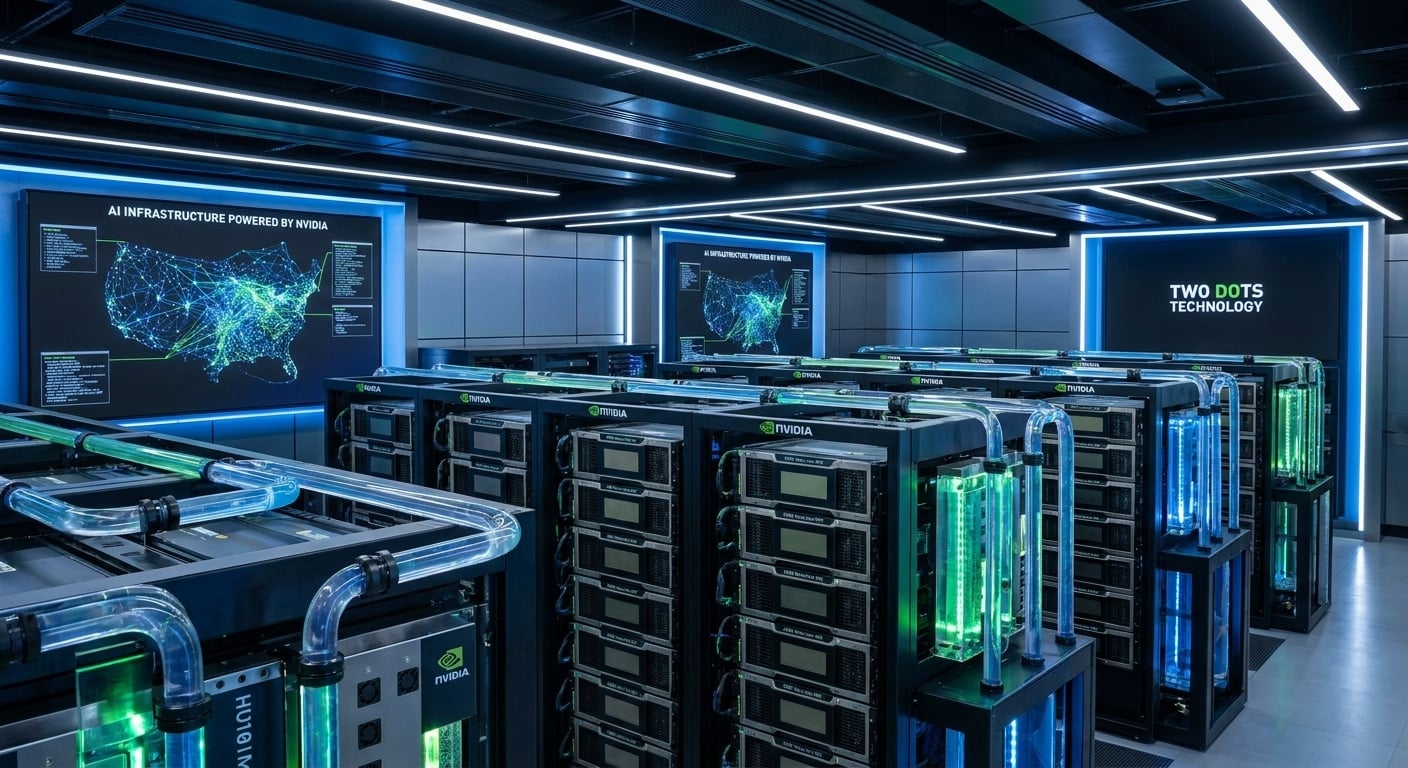
Traditional data centers were designed for workloads like hosting websites, databases, ERP, CRM, and classic cloud computing applications. AI data centers, however, are being called upon to serve much more demanding AI workloads: training large models, real-time inference, vector search, image generation, personalization, and predictive analytics. These tasks require high-density GPU servers, faster networks, advanced thermal management, and vast amounts of energy. The transition is not a simple hardware upgrade; it’s an architectural change. Concentrating power in racks with NVIDIA GPUs and other accelerators increases the thermal load and leads to solutions like liquid cooling, dedicated power systems, and new facility design practices.
For better organic performance, the topic AI data centers it needs a clear structure, specific answers and practical check points. The following outline helps to quickly see which factors are most important to the reader and for evaluating the content.
AI utilization fields for AI data centers
Indicative distribution into strategy, production and measurement
78%
Research
86%
Production
72%
Control
64%
Measurement
For e-commerce owners, the importance of this development is greater than it seems. An e-shop that relies on e-commerce AI for personalized product recommendations, sales chatbots, automatic catalog categorization or product description creation depends on the infrastructure behind the SaaS tool or cloud provider. If cloud costs increase due to energy, chips or demand, the cost is gradually passed on to the end user. If there is a bottleneck in computing power, access to powerful models can become more expensive or more limited. If latency increases, the user experience is directly affected, especially in functions such as AI search and real-time personalization.
The data behind the pressure on energy, chips and the cloud
The clearest sign of the pressure is energy. According to the International Energy Agency, global electricity consumption from data centers, AI and cryptocurrencies was about 460 TWh in 2022 and could exceed 1,000 TWh by 2026. This is the context in which data center energy consumption should be read: we are not talking about a small operational expense, but a factor that affects the power grid, investments in new facilities and the sustainability strategy of providers. As the chart below shows, energy demand is growing at a rate that does not allow for hasty decisions in companies planning to integrate AI into critical operations.
Global Energy Consumption from Data Centers, AI and Crypto
Source: International Energy Agency, Electricity 2024
Electricity consumption in TWh
The same picture is reflected in the United States, where much of the world's AI infrastructure is concentrated. McKinsey has estimated that the demand for data center power in the United States could increase from 17 GW in 2022 to 35 GW in 2030. For an e-shop owner in Europe or Greece, this may seem far-fetched, but it is not. International cloud prices, GPU capacity availability and the policies of major providers are affected by these figures. When providers invest billions in new facilities, transformers, cooling systems and energy contracts, the economic model of AI services changes.
Data Center Power Demand in the USA
Source: McKinsey, Investing in the rising data center economy
17 GW
35 GW
20222030 (Forecast)
A second level of pressure is the cost per AI interaction. Goldman Sachs has reported, based on estimates of the energy intensity of AI, that a query in ChatGPT can require about 2.9 Wh, compared to about 0.3 Wh for a classic Google search. The exact price varies by model, hardware, optimization and workload, but the order of magnitude shows why generative AI cannot be treated as an unlimited and free resource. In an e-shop with tens of thousands of visits per month, each AI-powered function must be evaluated based on the business result it brings: increased conversion rate, reduced tickets, increased average order value or better inventory management.
Indicative Action per Query
Source: Goldman Sachs, AI is poised to drive 160% increase in data center power demand
0.3Wh
2.9Wh
Google SearchChatGPT Query
The implications for e-commerce owners: cost, speed, reliability
The first impact is financial. AI data centers require expensive hardware, often with limited availability, especially when it comes to NVIDIA GPUs and advanced accelerators. This means that SaaS tools that use machine learning or generative AI may be priced more strictly per usage, per seat, per token, or per number of automations. If an e-commerce store integrates AI at every stage of the funnel without a plan, it may see operating costs increase without a corresponding increase in revenue. The right question is not “should I put AI in?”, but “at what points in the customer journey does AI measurably improve the outcome?”.
The second impact is speed. In e-commerce, latency is not a technical detail; it is a sales factor. If an AI search is slow to return results or a chatbot is slow to answer pre-purchase questions, the user loses trust. This is why we see the increasing importance of edge computing, where certain functions are moved closer to the end user. Not every AI action needs to call a large model in a remote data center. For frequently asked questions, product filters, simple suggestions, or caching popular answers, there are more efficient architectures that reduce the reliance on central AI data centers.
The third impact is reliability and sustainability. Customers, especially in markets with increasing environmental sensitivity, no longer only evaluate price and delivery. They also evaluate brand responsibility. Sustainable data centers, renewable energy sources, efficient cooling and transparency at the infrastructure level are starting to influence brand perception. This does not mean that a small and medium-sized e-shop needs to know every detail about its provider’s servers. It does mean, however, that it should choose partners with a clear policy on energy, security, redundancy and compliance.
Step-by-Step guide to AI-ready e-shop without excessive risk
Adopting AI in e-commerce requires a practical plan, not unmeasured enthusiasm. AI data centers will continue to evolve, but the businesses that will win are not necessarily those that buy the most tools. They are those that connect the technology to clear business goals. An owner should treat AI infrastructure the way they treat performance marketing: with budget, KPIs, attribution, testing, and ongoing optimization.
Implementation steps from audit to scaling
Start with an audit of real needs. Record where time or revenue is being wasted: customer support, product discovery, product descriptions, stock forecasting, segmentation, email flows or content production. Don't start with the tool; start with the problem.
Set a financial goal for each AI use. For example, an AI chatbot should reduce tickets or increase conversions in specific categories. A recommendation engine should impact average order value. A content production tool should reduce publishing time without sacrificing SEO quality.
Review the cost model. Ask providers to explain how they price usage, tokens, API calls, storage, vector database, and training. Cloud costs should be built into the business case from the beginning, not appear as a surprise after scaling.
Design a layered architecture. Not every function needs to go through a large AI model. Combine rules, caching, smaller models, search indexes, and, where necessary, powerful generative AI. This approach reduces cost and latency.
Measure performance in real-world conditions. Test response speed, accuracy, impact on Core Web Vitals, behavior at peak traffic, and response quality. An AI feature that impresses in a demo but lags in Black Friday traffic can hurt sales.
Choose providers with resilience. Ask about uptime, region availability, data residency, security, energy policy, use of sustainable data centers and disaster recovery. For e-shops with international sales, geographical infrastructure dispersion is a commercial advantage.
Roll out gradually. Start with a product category, customer segment, or specific use case. Measure 30 to 60 days and then decide if it’s worth expanding. AI scaling without measurement is often expensive.
How to turn AI infrastructure into a competitive advantage
AI data centers show that artificial intelligence is not just software. It is power, cooling, networks, chips, data pipelines and business decisions. For an e-shop, this creates a new form of competition. Those who use AI superficially, simply adding a chatbot or some automated texts, will see limited value. But those who build the right strategy around product data, first-party customer data, speed of experience, intelligent search and task automation, can really improve their margins.
The practical priority is to create a clear AI operating model. Who decides which AI tools go into the stack? Who controls the quality of the outputs? Who monitors costs? Who ensures that customer data is used legally and securely? These questions are just as important as platform selection. The technical team, marketing, operations, and management must have a common vision of what AI means in terms of cost and outcome.
In the future, value will not only be about who has access to the most powerful model, but also about who is using the right model for the right job. A smaller, faster, and cheaper model may be ideal for product categorization. A more powerful model may only be needed for complex conversations or buying behavior analysis. Intelligent workload allocation is how an e-shop protects margin, speed, and customer experience.
The conclusion is simple but crucial: AI data centers will continue to push the boundaries of technology, but e-commerce businesses don’t need to passively watch the evolution. They can prepare with better data, tighter cost control, selection of reliable partners, and AI functions tied to real KPIs. Artificial intelligence can become a growth driver, as long as it is not treated as a fad, but as an infrastructure that requires strategy, measurement, and accountability.
How do AI data centers affect e-commerce businesses?;
AI data centers directly impact e-commerce businesses through the increased cost, speed, and reliability of the AI tools they use. The infrastructure behind SaaS tools impacts functions such as recommendation engines and customer support, impacting user experience and operational costs.
Why is AI data center architecture important for an e-shop?;
The architecture of AI data centers is critical for managing large AI workloads, such as model training and real-time inference. It impacts the performance and cost of AI tools used for personalized recommendations, chatbots, and predictive analytics.
What are the main cost drivers in AI data centers?;
The main cost drivers include energy, computing power, and high-speed networks. Increased demand for GPU servers and advanced cooling solutions is leading to higher costs for e-commerce businesses using AI tools.
How can an e-shop improve the performance of its AI tools?;
An e-shop can improve the performance of its AI tools by choosing the right models for specific functions, using edge computing to reduce latency, and evaluating performance through clear KPIs. It is important to choose tools that are linked to measurable commercial results.
What is the importance of sustainability in AI data centers for businesses?;
Sustainability in AI data centers is influencing brand image and partner selection. Customers value the responsibility of businesses, making the use of renewable energy sources and sustainable practices important.
What should e-commerce businesses know about energy consumption from AI data centers?;
Energy consumption from AI data centers is significant due to increased demand and the impact on cost and sustainability. Businesses should consider their providers' energy policies to manage costs and their environmental responsibility.
What is the main topic of the article about AI data centers?;
The conversation around AI data centers is no longer just about hyperscalers, chipmakers, or big tech companies.
What's changing in AI data centers and why does it concern e-shops?;
Traditional data centers were designed for workloads such as website hosting, databases, ERP, CRM, and classic cloud computing applications.
What should I know about The data behind the pressure on energy, chips and the cloud?;
The clearest sign of the pressure is energy. According to the International Energy Agency, global electricity consumption from data centers, AI, and cryptocurrencies was about 460 TWh in 2022 and could exceed 1,000 TWh in 2026.
What should I know about Global Energy Consumption from Data Centers, AI and Crypto?;
The same picture is reflected in the United States, where much of the global AI infrastructure is concentrated.