Why humanoid robots go from demo to business case
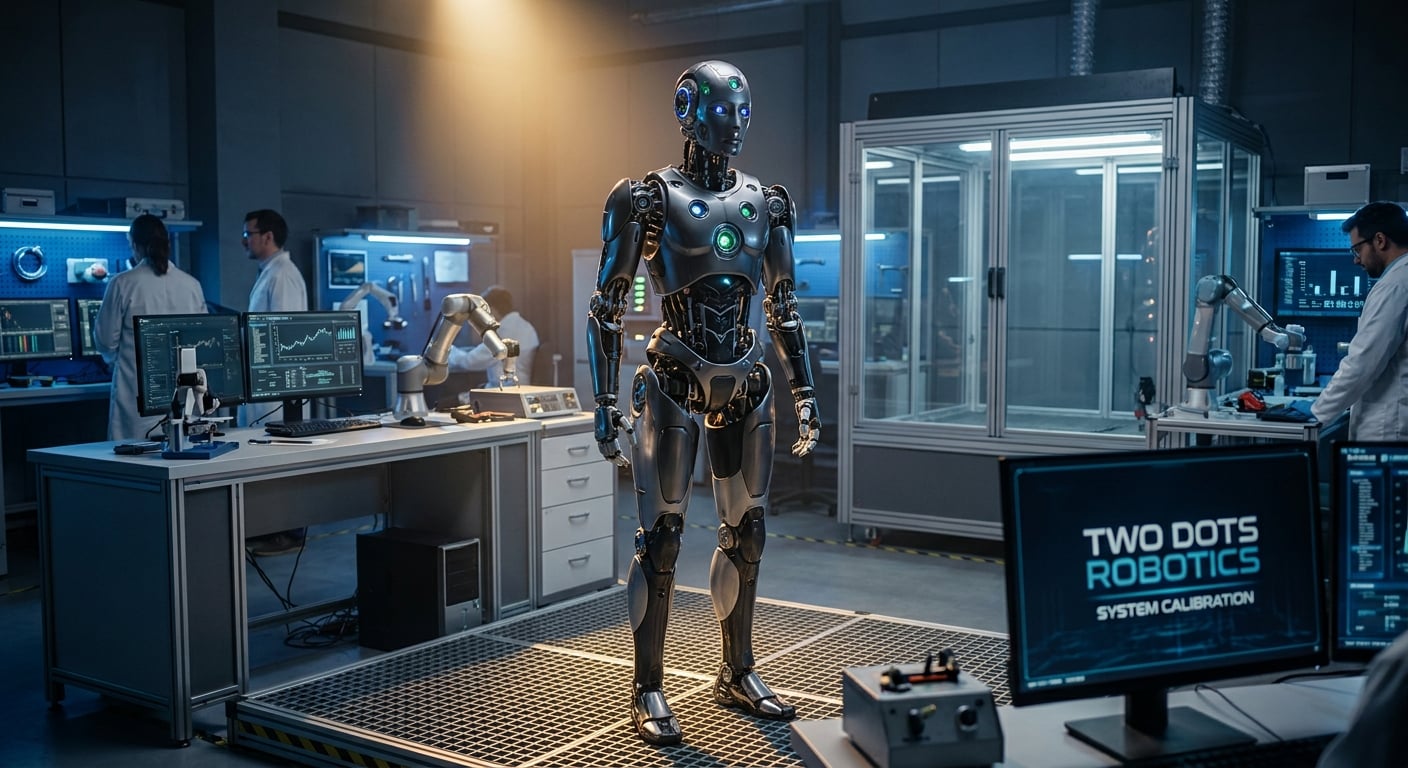
Humanoid robots are no longer just impressive videos from robotics labs. Interest around them is growing because they combine three technological curves that until recently were evolving relatively independently: artificial intelligence, more mature robotics hardware, and the need for resilient, automated operations in business. The DesignNews article on developments in humanoid robots highlights exactly this convergence: better actuators, more efficient robot sensors, stronger edge AI, improved computer vision, and AI models that can be trained faster on complex physical world tasks. For an e-commerce owner, the critical question is not whether a robot can walk, dance or lift a box at a show. The critical question is whether it can reduce bottlenecks in the warehouse, increase fulfillment reliability, reduce picking errors, improve shipping speed and integrate with existing WMS, ERP and customer service processes.
Robotics has already changed the way large logistics networks operate. But humanoid robots have a special promise: they are designed for environments built for humans. That means doors, shelves, stairs, carts, packing counters, storage areas and workstations where a traditional industrial robot often needs dedicated installation. If the technology matures commercially, autonomous robots of this type can act as a flexible workforce for repetitive tasks, especially during peak periods such as Black Friday, Christmas, flash sales campaigns or seasonal stock rotation.
The macroeconomic basis of the trend is also important. The International Federation of Robotics recorded 541,302 new industrial robot installations worldwide in 2023, with Asia accounting for around 70% of installations. While these figures are mainly for industrial robotics and not exclusively humanoid robots, they show that companies are already investing in automation on a large scale. As shown in the graph below, the geographic distribution of robotics installation shows where the ecosystem of suppliers, technical support and production knowledge is maturing fastest.
Global industrial robot installations by region in 2023
Source: International Federation of Robotics, World Robotics 2024
Asia70%
Europe17%
America10%
Other areas3%
What's behind progress: AI, engineering and data
Progress in humanoid robots does not come from a single discovery. It comes from the gradual improvement of several levels at once. First, actuators have become more efficient, lighter and more precise, allowing a robot to move with greater stability and less energy consumption. Second, computer vision has improved significantly, giving a system the ability to recognise objects, distances, obstacles and changes in the environment. Third, AI is moving from simple pattern recognition to embodied AI, i.e. models that do not just “see” data, but link perception, movement and decision in physical space. This is critical for a warehouse robot that needs to figure out if a box is fragile, if an aisle is temporarily closed, or if a pallet has been placed differently from its intended position.
Fourth, the availability of training data is increasing. Robotics automation systems can learn from simulations, from teleoperation, from real operational logs and from synthetic environments. The ability to train a robot in thousands of variations of a task before it enters a real warehouse reduces testing costs and the risk of failures. Fifth, edge AI makes it possible to process data close to the device, reducing reliance on cloud latency. For an e-shop with a warehouse, this means a robot doesn't always have to wait for a response from a remote server to decide whether to stop, turn, avoid a worker, or adjust its grip on a product.
The commercial outlook is also reflected in the market forecasts. Goldman Sachs revised its estimate for the global humanoid robot market to 2035 from $6 billion to $38 billion, highlighting that faster AI improvements and falling component costs could radically change the adoption curve. The chart below shows how big the difference is between the previous and revised estimate.
Humanoid robots market forecast review for 2035
Source: Goldman Sachs Research, 2024
Previous assessment
6 billion dollars
Revised assessment
38 billion dollars
What it means for e-commerce, warehouses and fulfillment
For e-commerce, the greatest value of humanoid robots is not their “humanoid” appearance. It is the potential to automate tasks that currently remain difficult for more static automation systems. In warehouse automation, the most mature scenarios are item transport, picking support, sorting returns, moving bins, replenishing shelves and support at packing stations. An e-commerce brand with high SKU complexity, frequent product changes and intense seasonality has different needs than a factory with a fixed production line. That's where the promise of humanoids comes in: greater flexibility in an environment that is not fully predictable.
At the same time, the need for logistics automation is growing because customers are used to faster deliveries, more accurate shipment information and less tolerance for errors. A picking error is not just an operational cost; it's a potential return, negative feedback, increased customer support tickets and loss of trust. Cobots and more specialized autonomous robots have already shown that human-machine collaboration can improve productivity without requiring a full replacement of human teams. Humanoid robots, if they pass the reliability and cost test, could act as a “flexible layer” on top of existing infrastructure.
The humanoid robots market is still in a high growth stage. According to MarketsandMarkets, the global humanoid robots market is estimated at $2.03 billion in 2024 and is projected to reach $13.25 billion in 2029, at a CAGR of 45.5%. As shown in the graph below, the expected growth is not a linear maturity assumption, but rather aggressive market scaling that requires more commercial applications, better reliability and clearer ROI.
Market size forecast humanoid robots
Source: MarketsandMarkets, Humanoid Robot Market Report
2024
2.03 billion dollars
2029
13.25 billion dollars
For an e-commerce owner, the practical reading of this data is simple: they don't need to buy humanoid robots tomorrow, but they do need to prepare the business to be able to evaluate, test and integrate automation without chaos. The technology is maturing, but most adoption problems are not just technical. They are problems of process, data quality, space, security, training and interoperability. If the WMS does not have clean inventory data, if barcodes are not consistently applied, if storage locations are changed atypically, or if returns processes are based on “empirical knowledge” of specific employees, no robot will magically solve the problem.
Step-by-Step evaluation guide for e-commerce owners
Risks, limitations and points to be aware of
Despite the enthusiasm, humanoid robots still have serious limitations. Battery autonomy, reliability in unstructured environments, speed of task performance, component durability and maintenance costs are factors that need to be evaluated with a cool head. A demonstration video may show a robot performing a task, but an e-commerce warehouse needs thousands of cycles of repetition with a low failure rate. The difference between “works once” and “works reliably every day” is huge.
There is also the issue of security and compliance. Robots moving alongside humans must have safe mechanical limits, reliable emergency stops, clear behaviour protocols and continuous event recording. The use of cameras and sensors creates additional data protection issues, especially if employees or visitors are being recorded. For Europe, businesses need to keep an eye on both AI Act developments and the requirements for mechanical safety and working environment. AI within physical systems is not just a software project; it is a combination of engineering, legal liability and operational governance.
Another factor is demographic pressure. The ageing population affects the supply of labour, health care, production and logistics. According to the UN, the global population aged 65 and over was about 761 million in 2021 and is projected to reach 1.6 billion by 2050. This does not mean that robots will immediately replace human labour, but it explains why governments and businesses are seriously considering automation in environments where staff availability may be under pressure.
World population aged 65+ years
Source: United Nations DESA, World Social Report 2023
The practical conclusion for the next three years
Humanoid robots are one of the most interesting technological developments for physics-based businesses, but should not be seen as an immediate, universal solution. For most e-commerce brands, the right strategy for the next three years is “automation readiness”: clean data, standardized processes, modular technology architecture, proper WMS, measurable KPIs and a culture of continuous improvement. When humanoid robots become more affordable and reliable, companies that have already organized their operational backbone will be able to move quickly. The rest will be trying to solve technology, process and human resistance problems simultaneously.
The greatest opportunity is not to “replace the human”, but to remove from human labour the tedious, repetitive and low-value movements. This allows teams to focus on quality control, service, process improvement, merchandising, customer experience and development. If humanoid robots succeed commercially, they will become part of a broader e-commerce automation ecosystem, along with WMS, AI forecasting, dynamic inventory management, robotics automation and data-driven operations. The question for practitioners is not whether the technology is impressive. It's whether the business is ready to leverage it with discipline, metrics and a clear business objective.
Frequently Asked Questions
What is the first step before evaluating humanoid robot suppliers?;
Start with process mapping. Capture the 20 most frequent and 10 most costly tasks in the warehouse or fulfillment. Measure time per task, frequency, error rate, need for human judgment, risk of injury, and impact on customer experience. A task like moving bins may be ideal for automation, while assessing a return with product wear and tear may still require human judgment or a hybrid AI model. Don't start with the question “which robot should I buy?”. Start with “which process, if improved by 20%, will change the economics of the business?”.
How to properly calculate ROI before investing in humanoid robots?;
ROI should include purchase or leasing costs, maintenance, software licenses, integration with WMS and ERP, downtime, training, security, insurance requirements and layout changes. At the same time, it must include benefits beyond reducing labor hours: fewer errors, faster shipping, fewer returns due to errors, better space utilization, late cut-off capability for orders, and greater resilience during peak periods. In many cases, automation pays off not because it “cuts costs” but because it allows more orders without a commensurate increase in complexity.
How should a pilot for humanoid robots be designed?;
A pilot must be limited, measurable and time-bound. Choose a process, for example, transporting products from picking zone to packing station, and define KPIs: units per hour, percentage of failed trips, downtime, human intervention per shift, safety incidents, impact on shipping time and employee feedback. Ask the vendor for real performance data from environments similar to yours, not just marketing videos. If the robot needs ideal conditions to operate, then the pilot should reveal this early on.
What should a company prepare before integrating humanoid robots?;
Success does not only depend on the machine. It depends on whether the company can give it clear instructions. That means standardized storage locations, consistent signage, up-to-date inventory, safe routes, clear rules for human and robot collaboration, and team training. Workers need to know when to intervene, when to let the system complete a task, and how to report errors. Trusting people is an operational asset. If the team sees the robot as a threat or an obstacle, adoption will become more expensive and slower.
Why are humanoid robots becoming important for business?;
Humanoid robots combine artificial intelligence with advanced hardware, offering flexibility and automation in environments designed for humans. They can reduce bottlenecks and increase reliability in warehouses and logistics.
What technologies are contributing to the advancement of humanoid robots?;
Progress has been driven by improvements in actuators, computer vision and artificial intelligence. These technologies allow robots to perform complex tasks with greater precision and speed.
What is the benefit of humanoid robots for e-commerce?;
In e-commerce, humanoid robots can automate repetitive tasks, improving the speed and accuracy of fulfillment. This leads to a better customer experience and reduced errors.
What are the challenges in adopting humanoid robots?;
Key challenges include cost, reliability in unstructured environments and security. Also, successful integration requires well-organised data and standardised processes.
How can businesses prepare for the integration of humanoid robots?;
Companies need to map their processes, calculate the real ROI and set up pilot projects. Staff training and improving the interoperability of systems are also critical.
What are the forecasts for the market for humanoid robots?;
The market for humanoid robots is expected to grow significantly, reaching $38 billion by 2035. Improving artificial intelligence and decreasing component costs are driving this growth.
To turn these trends into measurable value, see the service Business Automation & AI of TWO DOTS.
To turn these trends into measurable value, see the service ERP & Business Software of TWO DOTS.
To turn these trends into measurable value, see the service E-Shop Development of TWO DOTS.
Sources: DesignNews: What's Behind Advances in Humanoid Robots | International Federation of Robotics, World Robotics 2024 | Goldman Sachs Research: Humanoid robot market outlook | MarketsandMarkets: Humanoid Robot Market | United Nations DESA, World Social Report 2023