With over 20 years of experience, we transform your digital presence. We specialize in website and E-Shop development, SEO and Digital Marketing, ERP software and smart automation that take your business to the next level.
Milan Design Week shows how design and brand experience can influence the commercial value of an e-commerce brand.
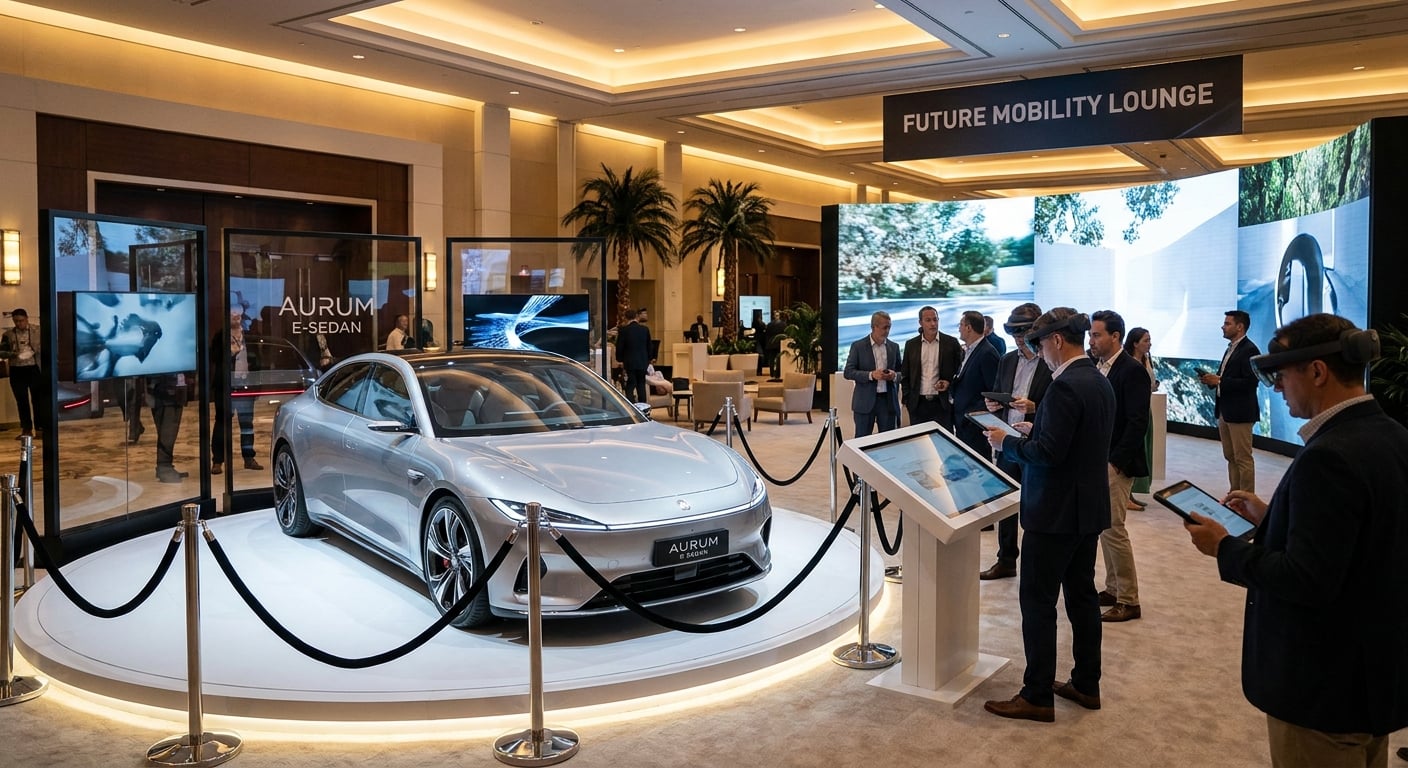
Milan Design Week has for years ceased to be just a week of furniture, lighting and interior design. It has evolved into a global testing ground for how brands build cultural value, experience and commercial desire. Design Week's article on the automotive edge of the event highlights exactly this shift: automakers no longer see design as a decorative wrapping around the product, but as a language of connecting with audiences who buy based on emotion, identity, technology and experience. For an e-commerce owner, the brand experience is not a luxury for large groups; it is a mechanism for diversification, increasing trust and improving conversion.
What Milan Design Week reveals about the new Brand Experience
The presence of automotive brands at Milan Design Week shows that car brands want to talk beyond horsepower, autonomy or technical superiority. They choose installations, collaborations with designers, materials, lighting, sound, architectural storytelling and immersive experiences to make the audience feel what the brand stands for before they even see the product in detail. This is the big lesson for every e-commerce brand: consumers don't just buy features, they buy the promise they understand, the feeling they remember and the credibility they receive at every touchpoint.
In the Milan Design Week environment, automotive design acts as a cultural ambassador. A car is presented not only as a means of transport, but as part of a lifestyle: sustainable materials, electrification, personal space, digital interfaces, comfort, status, technological intimacy. Similarly, an online store is not just a catalogue of products. It is retail experience, customer experience, visual identity, microcopy, after-sales support, packaging, speed, return policy and content that gives the customer a reason to return.
Brand Experience is becoming particularly important because markets are becoming more and more homogeneous. Almost every product can be copied, every offer can be compared and every price can be pushed. Where a business is not easily copied is in the overall sense of trust and consistency it creates. This is exactly what the automotive brands in Milan take advantage of: they turn the visit into a memory experience, not just a product display.
Why automotive design is about experiences, not just products
The automotive industry is undergoing one of the biggest transitions in its history. Electrification, software, subscription services, sustainability and new commuting habits have changed the way consumers assess value. Technical innovation remains important, but it is not enough. When many electric vehicles promise acceleration, autonomy, screens and connectivity, differentiation is transferred to the design strategy and the emotional position of the brand in the buyer's mind.
According to the International Energy Agency, global sales of electric cars increased from around 3 million in 2020 to over 17 million in 2024. This increase is not just a technological fact; it's a market shift. The more a category matures, the more brands need to invest in meaning, not just functionality. As shown in the graph below, the speed of electric car adoption explains why automakers are looking to new storytelling arenas, such as Milan Design Week.
Global electric car sales
Source: International Energy Agency, Global EV Outlook 2025
For e-commerce, the analogy is direct. When a category matures, whether it's cosmetics, furniture, fashion, food, tech accessories or B2B products, increased competition reduces the effectiveness of simple feature display. The companies that stand out are those that turn features into a narrative: why the product exists, what problem it solves, what it says about the customer who chooses it, how it fits into their daily lives and why it is worth buying from that brand.
The data behind the experience: personalisation and trust
Brand Experience is not a vague creativity. It is measured in engagement, conversion rate, repeat purchases, average cart, loyalty and friction reduction. McKinsey, in its Next in Personalization research, reports that 71% of consumers expect personalized interactions from businesses, while 76% are disappointed when that doesn't happen. These percentages show that customer experience is not an additional feature, but a core expectation. A brand activation may start with an impressive installation in Milan, but in e-commerce it continues through product recommendations, email flows, landing pages, selection quizzes, post-purchase content and service.
Consumer expectations for personalization
Source: McKinsey, Next in Personalization 2021
They expect personalized interactions71%
They are disappointed when they do not receive them76%
But personalisation doesn't just mean showing the customer's first name in an email. It means identifying the stage they are at: new visitor, comparing user, cart abandoner, repeat shopper, VIP customer or professional who needs technical information. It also means being consistent in the omnichannel experience: social media, website, newsletter, marketplace, physical store, pop-up, packaging and customer support must deliver the same promise with different intensity, not different personalities.
The second critical area is friction at checkout. The Baymard Institute estimates the average cart abandonment rate at approximately 70.19%, based on aggregated data from multiple surveys. For e-commerce owners, this is perhaps the starkest reminder that the experience is not just aesthetics. A brand can have great storytelling, photos and social proof, but if the buying process creates doubt, cost or delay, the customer leaves.
Average cart abandonment rate
Source: Baymard Institute, Cart Abandonment Rate Statistics
The graph above shows why the Brand Experience should continue to the last screen, not stop at the product page. The brand promise is tested at the exact moment the customer decides whether to complete the purchase.
What this means in practice for e-commerce brands
The example of Milan Design Week shows that brands with strong luxury branding are not just selling high-priced products; they are directing the perception of value. This does not mean that every e-shop has to set up a showroom or invest in expensive experiential marketing. It means they need to think of the customer journey as a single experience. From the first ad to unboxing, every touchpoint must answer three questions: why should I notice you, why should I trust you, and why should I buy from you now.
In practice, e-commerce branding needs clear positioning. A brand that sells furniture can talk about materials, durability and dimensions, but the real value is born when it shows how it changes the space and the customer's everyday life. A fashion e-shop may show products on a white background, but it will increase desire when it showcases styling, use circumstance, texture, fit and content from real customers. A B2B e-commerce can reduce uncertainty with technical guides, comparison tables, calculators and live support. In all cases, product storytelling transforms the product from an object to a solution.
The phygital retail logic is also important. Even without a physical store, an e-commerce brand can create a sense of physical contact through 360-degree videos, augmented reality trials, detailed photos, size guides, real reviews, samples, personalized bundles and content that shows the product in real-life conditions. Automotive brands are using Milan venues to make the technology tangible. E-commerce needs to do the same digitally: reduce the distance between the screen and the ownership experience.
Another lesson is that consumer engagement is not built with a campaign. It's built with pace. Brands appearing at design events create conversations before, during and after the experience. An e-shop can do the same with editorial calendars, drops, seasonal guides, behind-the-scenes content, collaborations with creators, email sequences and community-driven actions. The point is not to constantly shout «buy» but to create reasons to return.
Step-by-Step guide to turn Brand Experience into sales
Step 1: Map the entire customer journey. Don't start with the website, start with the first need. Where does the customer discover your category? On Google, on TikTok, in a marketplace, from a friend, in a physical store or through advertising? Record each touchpoint and note what emotion it evokes: trust, confusion, interest, doubt or indifference.
Step 2: Define the core brand promise in one sentence. If you can't clearly describe what makes your brand different, the customer won't do it for you. The promise should be specific: faster selection, better fit, safer purchase, aesthetic excellence, sustainable provenance, expert guidance or curated quality.
Step 3: Turn product pages into decision experiences. A good product page contains more than just a title, price and photo. It contains a clear benefit, human-language technical features, social proof, FAQs, comparative data, usage instructions, return policy and combination suggestions.
Step 4: Build personalized flows. Create different emails and onsite messages for new visitors, abandoned carts, first-time customers and repeat customers. Use behavioral data without overkill and with respect for privacy.
Step 5: Remove friction from the checkout. Display shipping costs early, offer popular payment methods, reduce required fields, allow guest checkout, make your returns policy clear, and make sure the mobile experience is fast.
Step 6: Measure the Brand Experience with commercial indicators. Track conversion rate per channel, add-to-cart rate, checkout completion, repeat purchase rate, customer lifetime value, NPS, returns, reviews and support response time. Thus, branding ceases to be a «pretty picture» and becomes a development system.
Conclusion: from the design event to the commercial result
Milan Design Week shows that the most mature brands do not see design as a final finish, but as a strategic tool. Automakers are going where the public is ready to think about aesthetics, materials, technology, culture and the future. This is the real automotive edge: the ability to move the conversation from product to experience. For e-commerce owners, the course is particularly practical. Brand Experience must become part of the commercial architecture: from placement and content to checkout and after-sales.
TWO DOTS treats branding, design and digital commerce as a single ecosystem. An e-shop that wants to grow doesn't just need more traffic. It needs a clearer promise, a better experience, stronger trust and systematic improvement at every touchpoint. This is exactly what the shift of major automotive brands towards design culture proves: the market is won when the customer not only sees what you sell, but feels why it's worth choosing.
Do you want your e-shop to turn experience into sales?;
Proper e-shop development combines design, content, technical reliability and conversion strategy in an experience that helps the customer to make a decision more easily.
Milan Design Week is a global design event that showcases how brands build cultural value, experience and commercial desire through spaces, installations and narratives.
How does Milan Design Week influence automotive design?;
It shows that automakers are using design as a language to connect with consumers, projecting experiences, identity and technological direction beyond technical specifications.
Why is Brand Experience important for an e-commerce brand?;
Brand Experience helps an e-commerce brand differentiate itself, increase trust and improve conversion because the customer evaluates the overall experience, not just the product or price.
How does automotive design become an experience?;
With installations, materials, lighting, sound, storytelling and immersive environments that present the vehicle as part of a lifestyle and not just as a technical product.
What is the importance of personalization in e-commerce?;
Personalisation makes the experience more relevant for each visitor, reduces generality and can improve engagement, conversion rate and customer loyalty.
How can an e-shop improve the Brand Experience?;
With clean positioning, strong product pages, personalized flows, less friction at checkout, reliable service and a consistent image across all channels.
What is the key lesson for e-commerce owners?;
The key lesson is that commercial growth comes not just from more traffic, but from a better experience, clearer promise and less uncertainty at every touchpoint.