With over 20 years of experience, we transform your digital presence. We specialize in website and E-Shop development, SEO and Digital Marketing, ERP software and smart automation that take your business to the next level.
What ASI shows about the future of autonomous fleets
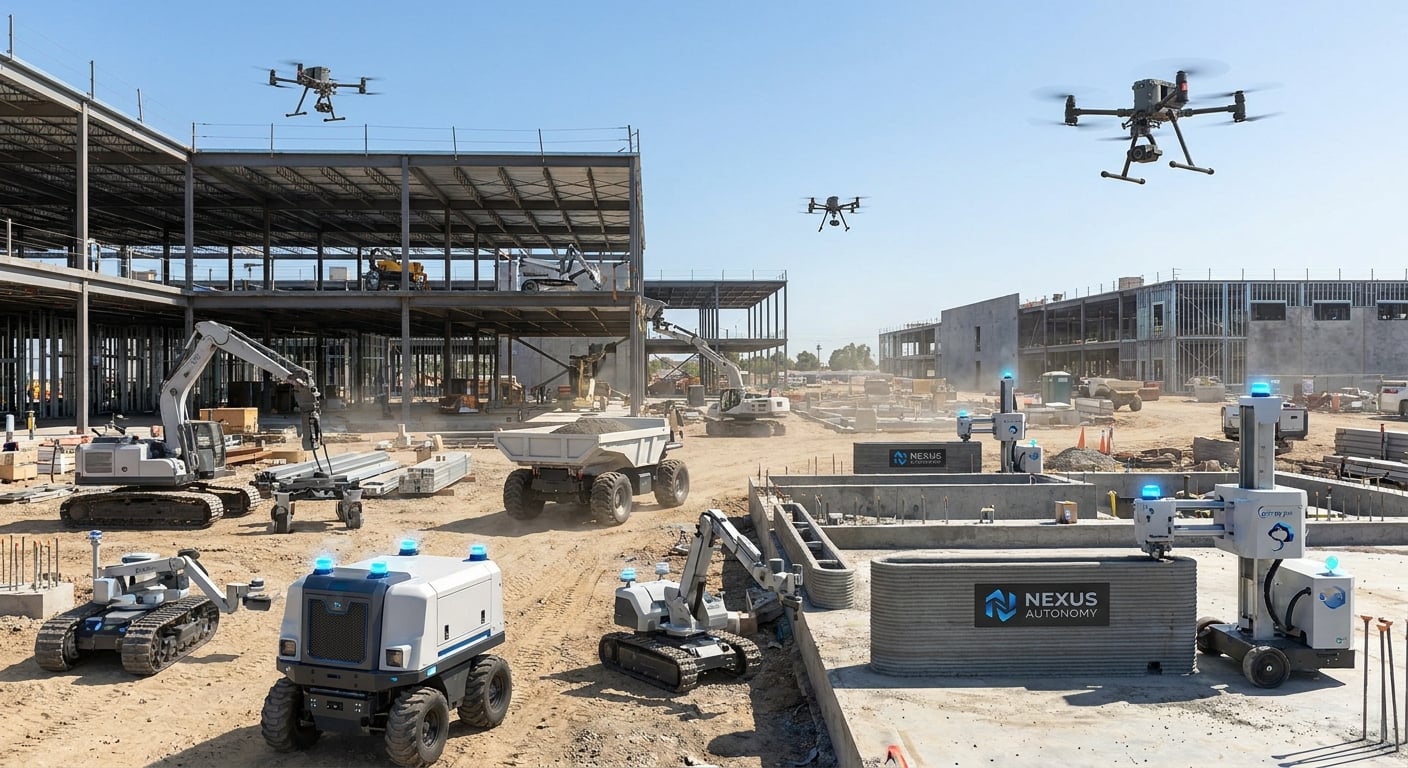
DesignNews“ article on Autonomous Solutions, Inc. highlights a trend that goes far beyond the construction industry: the automation of fleets in environments where scale, repeatability, and time pressures make the human-only model expensive, slow, and difficult to control. ASI focuses on autonomous construction equipment and systems that can transform existing vehicles and machinery into autonomous or semi-autonomous assets, with the goal of performing work on large projects such as data centers and solar farms. These projects have one thing in common: vast expanses of land, many repetitive routes, a need for precision, and intense delivery pressure. Simply put, when materials need to be moved, terrain needs to be shaped, or infrastructure needs to be erected on a large scale, automation isn’t ”cool technology,” but a way to get the job done with fewer bottlenecks.
For an e-commerce owner, the question isn’t whether to buy autonomous construction trucks. It’s about the logic behind the investment. The same principle that makes construction automation useful on a construction site applies to an online store: where there are repetitive tasks, high costs of delay, and a need for predictable execution, there’s room for automation. Warehouse management, inventory updates, order routing, invoicing, customer service, and ERP, WMS, and courier connectivity are the “jobs” of e-commerce. If not mapped properly, they become a source of errors, lost sales, and negative reviews.
Why automation becomes critical when scale increases
The need for autonomous fleets in data center and solar farm infrastructure is tied to a broader reality: fast-growing industries can’t rely on manual processes forever. Data centers are increasingly energy-hungry, renewables are demanding faster deployment, and construction has a chronic productivity problem. McKinsey has noted that global productivity in construction has been growing at about 1% per year for two decades, compared with 2.8% for the overall economy and 3.6% for manufacturing. This disparity explains why solutions like autonomous vehicles, fleet management, and AI in construction are now at the center of the conversation.
As the graph below shows, the manufacturing productivity gap is real and measurable. For an e-shop, the corresponding gap appears when sales grow but internal processes remain “manual”: more orders, more picking errors, delayed shipments, manual availability changes, and customer service drowning in repetitive tickets.
Average Annual Productivity Growth by Sector
Source: McKinsey Global Institute, Reinventing Construction, 2017
3.6%
Processing
2.8%
Overall economy
1%
Constructions
The second major pressure is demand for infrastructure. According to the International Energy Agency, electricity consumption from data centers, AI and crypto was about 460 TWh in 2022 and could exceed 1,000 TWh by 2026. This means that data centers are not just buildings with servers; they are critical infrastructure that must be built quickly, with reliable schedules and with strict cost control. This is where ASI’s automation logic takes on particular importance: when demand soars, execution time becomes a competitive advantage.
Electricity Demand from Data Centers, AI and Crypto
Source: International Energy Agency, Electricity 2024
Solar farms are another area where the speed of growth is creating pressure for automated solutions. The IEA reports that by 2023, photovoltaics will account for about three-quarters of global renewable power additions. When an industry is growing at this rate, companies are looking for ways to standardize processes, reduce downtime, and make better use of equipment and people. The same thinking applies to an e-shop that goes from 50 orders a day to 500: the problem is not just “more work,” but a greater need for predictable operation.
Photovoltaic Share in New Renewable Additions
Source: International Energy Agency, Renewables 2023
Photovoltaics75%
Other renewable sources25%
From the construction site to the e-shop: the common operating model
The connection between robotics in logistics and construction automation is more direct than it seems. In both cases, the goal is to transform a complex operation into a system with rules, data, and controlled flows. On a construction site, the fleet needs to know routes, risk areas, priorities, equipment status, and time windows. In an e-shop, the system needs to know inventory, orders, courier SLA, returns, picking times, profitability per SKU, and customer history. The technology changes, but the management principle remains the same: you don't automate chaos; first you measure it, organize it, and then automate it.
This is perhaps the most important lesson for e-commerce owners. Many online stores invest in e-commerce automation tools without having a clear picture of the process they want to improve. They install a chatbot without having categorized tickets, buy an ERP connection without having clear inventory rules, or enable dynamic pricing without knowing the real profitability after shipping, returns, and marketplace fees. The result is a faster, but not necessarily more accurate, system. ASI and similar solutions for autonomous fleets show the opposite: automation starts with environments with repeatability, safety rules, and clear performance goals.
Another point is safety. In the US, according to OSHA data for 2022, the construction industry accounted for about 19.9% of all private-sector worker deaths. Reducing people’s exposure to dangerous or monotonous tasks is a major reason for adopting autonomous construction equipment. In e-commerce, “safety” translates differently: fewer errors in shipments, less reliance on a single person who knows the process, better compliance in returns and billing, and a lower risk of operational collapse during peak periods such as Black Friday, Christmas or sales.
Deaths of US private sector workers
Source: OSHA, Commonly Used Statistics, 2022 data
Constructions19,9%
Other private sector sectors80,1%
The graph shows why safety is a key driver for autonomous construction equipment: when an environment has high operational risk, automation reduces human exposure to dangerous or monotonous tasks.
Step-by-Step automation guide for e-shop owners
The first step is to map the operation from order entry to delivery and possible returns. Record every stage: order source, payment verification, stock reservation, picking, packing, document issuance, tracking shipment, customer update, and after-sales management. Don’t start with the tool; start where time is lost or error is created. For example, if your team spends two hours a day updating availability in a marketplace, then supply chain automation and inventory connection take priority over a new newsletter pop-up.
The second step is to choose measurable KPIs. For automation to make sense, you need to know what it improves. Key metrics include order-to-shipment time, picking error rate, service cost per order, return rate due to incorrect shipment, stock accuracy, conversion rate per channel, and the percentage of tickets that can be answered with rules. Without such data, automation becomes a technology purchase, not a business decision.
The third step is to select use cases with a quick payback. For most e-shops, the first warehouse automation applications do not need to be warehouse robots. They can be barcode scanning, automatic voucher printing, real-time availability updates, split order rules, automated emails for delays, courier connection to OMS or automated categorization of customer requests. If there is a higher volume, then more advanced logistics automation solutions make sense, such as WMS with optimized picking routes, warehouse zones, replenishment forecasts and automated order assignment per warehouse.
The fourth step is piloting. Don’t change the entire operation in one week. Choose a product category, a warehouse, a sales channel, or a specific stage, such as shipment tracking. Set a 30- to 60-day test period, compare results to the previous period, and record not only the numbers but also the team’s experience. Experience with autonomous vehicles and fleet management shows that technology works best when people know what’s changing, who’s responsible, and how exceptions are handled.
The fifth step is scaling. If the pilot automation reduces errors, time or cost, then it is transferred to more categories and channels. This is where governance is needed: who approves new automations, who monitors failures, who checks the data and who decides when a process needs to change. Automation is not a project that ends; it is an operational capability that evolves along with the e-shop.
Metrics an e-shop should monitor after automation
The biggest pitfall after implementation is the feeling that “once the tool was in, the problem was solved.” In practice, automation requires constant monitoring. An e-shop should see weekly processing time, order backlog, shipping errors, returns, tickets per 100 orders, top SKUs availability, and demand forecast accuracy. If you implement last mile delivery rules, track on-time delivery by courier and region. If you implement automated customer service, measure not only how many tickets were closed, but also how many were reopened because the response did not solve the problem.
Equally important is data quality. Autonomous systems, whether it's construction automation or ecommerce automation, depend on accurate inputs. Wrong product weight means wrong shipping. Wrong supplier lead time means delivery promises that can't be met. Wrong SKU mapping means overselling. That's why investing in automation must be accompanied by data cleansing, a unified nomenclature, clear ownership, and regular exception checking.
Conclusion: automation as a competitive advantage
ASI’s history shows that automation advances most rapidly where complexity, scale, and the cost of delay become impossible to ignore. Data centers and solar farms need more predictable construction sites; e-shops need more predictable operations. The technology may be different, but the business question is the same: what repetitive process is limiting growth, and how can it be made faster, more accurate, and more measurable?;
For the e-shop owner, the right approach is not to chase every new AI tool or robotics in logistics. It is to identify the points where money, time and customer trust are lost. That is where automation has real value. When implemented with data, clear rules and gradual scaling, it turns from a “technological upgrade” into a business advantage that directly affects customer experience, operating costs and growth potential.
What is automation in autonomous fleets and why is it important?;
Autonomous fleet automation refers to the use of technologies to automate vehicles and equipment on a large scale. It is important because it increases efficiency, reduces costs, and improves accuracy in large projects such as data centers and solar farms.
How can automation benefit an online store?;
Automation in an e-shop helps automate repetitive processes such as inventory management and order routing. This reduces errors, increases service speed, and improves the customer experience.
What are the basic principles of automation in construction and e-commerce?;
In both cases, automation aims to transform complex operations into systems with rules and controlled flows. It is first necessary to map and organize the processes before automation.
What are the steps for successful automation in an e-shop?;
The steps include process mapping, selecting measurable KPIs, implementing use cases with rapid payback, piloting, and scaling successful solutions.
How does automation contribute to reducing errors and costs in an e-shop?;
Automation reduces human error in processes like picking and shipping, while improving inventory accuracy. This leads to lower operating costs and improved customer satisfaction.
What is the importance of security in automation for construction and e-commerce?;
In construction, safety is about reducing risks to workers. In e-commerce, safety is about reducing errors in shipments and ensuring reliable processes during peak periods.
Why is automation considered a competitive advantage for e-shops?;
Automation offers predictable and efficient operations, reducing costs and improving the customer experience. When implemented correctly, it can boost growth and provide a significant competitive advantage.