With over 20 years of experience, we transform your digital presence. We specialize in website and E-Shop development, SEO and Digital Marketing, ERP software and smart automation that take your business to the next level.
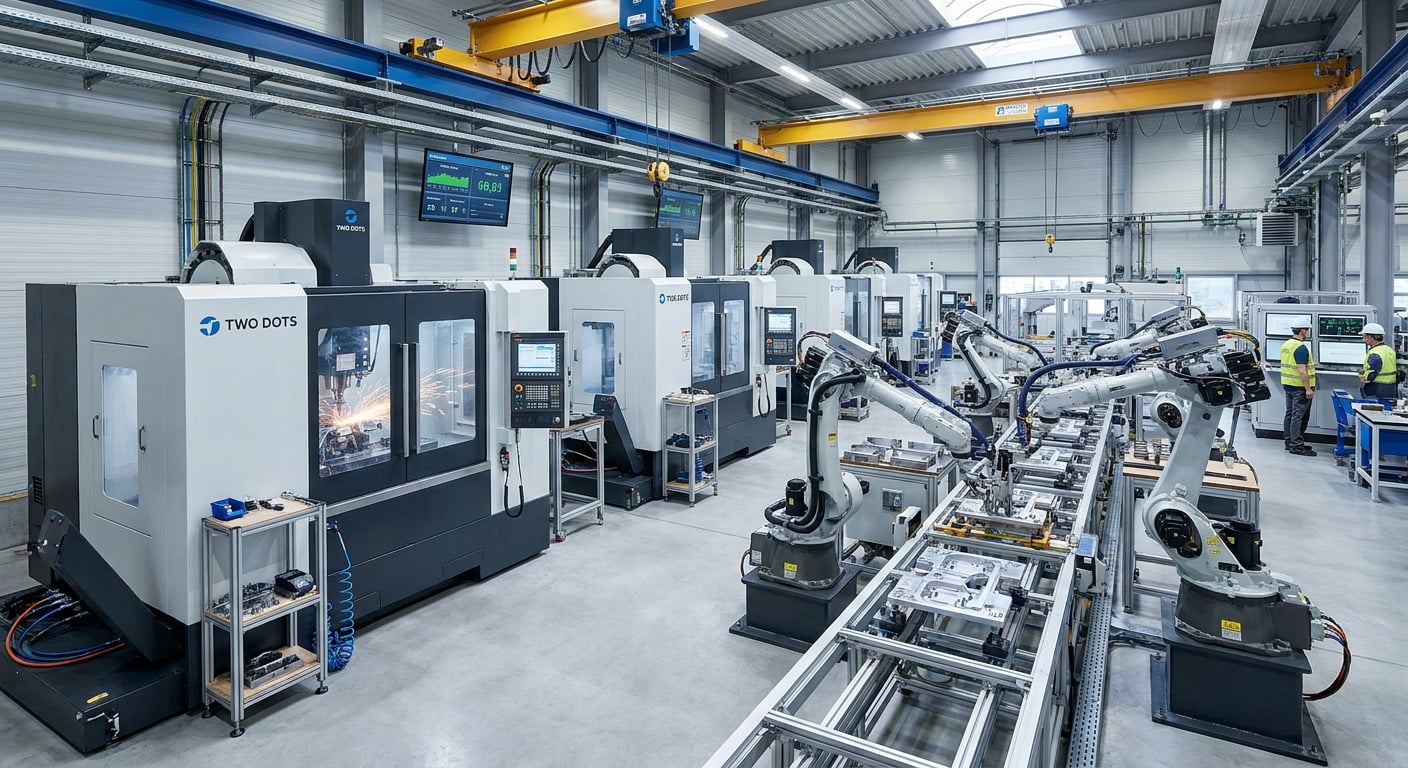
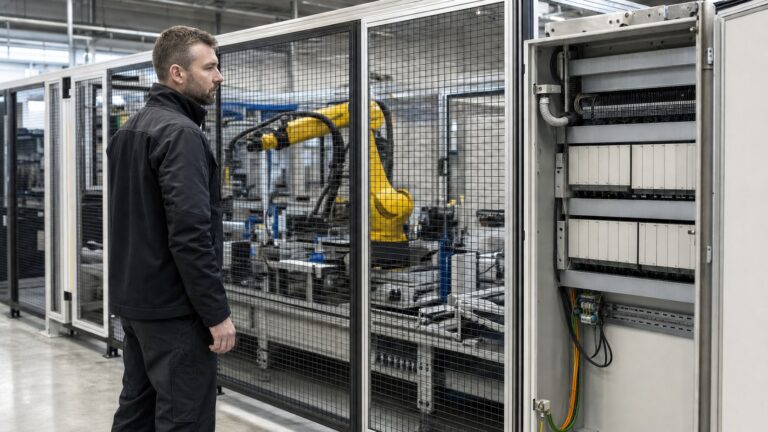
Robotics is no longer a topic that only concerns large automakers or high-capital factories. DesignNews’ article on CNC robotics highlights a significant shift: CNC robotic systems are not only used to replace human tasks, but to increase the flexibility, accuracy and repeatability of production. For an e-shop owner selling physical products, private label lines, personalized items, spare parts, decorations, furniture, packaging or accessories, this change can directly affect the way they design products, select suppliers, manage inventory and promise delivery times to their customers.
The basic idea behind CNC robotics is to combine the precision of CNC machines with the mobility and adaptability of industrial robots. Instead of relying solely on static production lines or manual finishing operations, a company can leverage robotic machining for cutting, drilling, grinding, engraving, trimming, milling, inspection or even supporting additive manufacturing. This changes the economic model of production: smaller batches, faster prototyping, fewer errors, greater consistency and the ability to produce on demand. In the world of e-commerce, where trends change quickly and customers demand choice, robotics can become a competitive advantage.
According to the International Federation of Robotics, annual industrial robot installations remain at historically high levels, with 541,302 new installations in 2023. This picture shows that manufacturing automation is not an experimental trend, but a mature investment on a global scale. As shown in the graph below, Asia maintains a dominant position in new installations, which also affects the supply chains of e-commerce brands that produce or source products from international markets.
{ “type”: “pie”, “title”: “Distribution of new industrial robot installations by region in 2023”, “subtitle”: “Source: International Federation of Robotics, World Robotics 2024”, “labels”: [“Asia”, “Europe”, “Americas”, “Other regions”], “datasets”: [{ “label”: “Share of installations”, “data”: [70, 17, 10, 3], “unit”: “%” }], “colors”: [“#FCA311”, “#030633”, “#E5E5E5”, “#555555”] }
From mass inventory to precision demand
The classic model of many e-shops relies on large orders from suppliers, stock entry, storage, promotion and gradual sales. The problem is that this model creates risk: incorrect demand forecasting, tied-up capital, products left on the shelf, increased storage costs and clearance discounts. Flexible production supported by CNC robotics opens a different path. If a brand can produce smaller batches with consistent quality or collaborate with suppliers who have such technology, then it reduces the need for excessive stock and can test new ideas with lower risk.
CNC robotics is particularly useful when the product has many variations. Think of an e-shop with personalized wooden gifts, metal signs, custom parts for hobbyists, premium packaging, equipment for professionals or short runs of interior design products. With traditional tools, each new variation can require setup time, human intervention and an increased chance of error. With CNC robotic systems, the process can be digitally programmed, precisely repeated and linked to order data. This doesn’t mean that every e-shop needs to buy robots. It does mean that they need to know how to evaluate production partners using smart manufacturing and understand how this technology affects cost, quality and lead time.
The global growth of industrial robots shows that the technology is steadily being adopted, even when the economy is pressured by inflation, rising energy costs or unstable supply chains. The chart below shows the evolution of annual industrial robot installations over the past five years, with the sharp acceleration after 2020 explaining why more and more suppliers now have access to automated production capabilities.
Annual installations of industrial robots worldwide
Source: International Federation of Robotics, World Robotics 2024
What does an e-shop gain from suppliers with CNC robotics?
The first practical benefit is machining accuracy. In e-commerce, quality is not only seen in the product when the customer holds it in their hands; it is seen in reviews, returns, customer photos, replacement costs, and brand reputation. A custom product that arrives with incorrect dimensions, imperfections, or inconsistencies between pieces immediately creates support costs. Robotics helps reduce these variances because it performs the same motion with programmed repeatability and can be integrated with quality control processes.
The second benefit is the speed of new product development. An e-shop that waits months for samples, molds, corrections and new batches is missing out on commercial opportunities. When production relies more on digital files, robotic arms and CNC machining, the transition from idea to prototype can happen faster. This is crucial for brands that work with seasonality, TikTok trends, limited-availability collections or B2B clients that need customized solutions.
The third benefit is the possibility of mass customization. Customers are used to choosing color, size, engraving, material, message or functional variant. But each choice increases complexity in the back office. Production on demand with production automation can allow an e-shop to offer more options without filling the warehouse with dozens of low-circulation SKUs. Here, robotics is not just factory technology, but a commercial strategy tool: it allows for product differentiation, better profit margins and is more difficult to copy by competitors who buy ready-made stock.
The countries with the most industrial robot installations show where much of the technological infrastructure that influences international suppliers is concentrated. For e-shops that work with manufacturers in China, Japan, the US, Korea or Germany, the following data helps to understand why certain markets can support more mature automation solutions and digital manufacturing.
Leading countries in new industrial robot installations in 2023
Source: International Federation of Robotics, World Robotics 2024
276288 units
China
46106 units
Japan
37587 units
USA
31444units
South Korea
28355 units
Germany
Where does production connect to digital commerce?
For an e-shop owner, the critical question is not whether a robot can cut, grind or drill with precision. The critical question is whether this capability can be connected to the business model of the company. Value appears when order data, ERP, e-commerce logistics, availability rules and product planning work as a single system. For example, an e-shop can show the customer personalization options, automatically create a production file, send it to the CNC partner, inform the customer about the progress and keep lower inventory levels.
This connection requires data discipline. If product variants are unclear, if design files are not versioned, if production times are not recorded, or if quality standards are not measurable, then even the best supplier with industrial robots will not solve the problem. Robotics pays off when the e-shop knows what it wants, with what tolerance, at what time and with what inspection process. That is why brands that want to move to custom or semi-custom production must invest not only in suppliers, but also in product data management, clear specifications and proper presentation of options on the site.
Step-by-Step: how to evaluate if CNC robotics is right for your e-shop
A practical guide from idea to pilot production
Step 1: Map out the products that make sense for agile manufacturing. Not all products are suitable. Start with categories with high profit margins, frequent variations, a need for personalization, or volatile demand. If you sell products that are differentiated only by packaging, the greatest value may lie in custom packaging. If you sell parts or accessories, the value may lie in dimensional accuracy and small batch sizes.
Step 2: Calculate the true cost of today’s model. Don’t just compare unit price. Add in storage costs, defect returns, old stock discounts, late costs, samples, lost sales, and team time. The ROI of automation isn’t always seen in the cheapest part, but in the overall risk reduction and ability to launch faster.
Step 3: Ask suppliers for technical transparency. Ask if they use CNC robotics, which processes are automated, what tolerances can be guaranteed, how is quality control done, what files are needed, and what is the minimum order volume. A mature partner will be able to explain the process without general answers.
Step 4: Create a small pilot SKU. Don’t move your entire production line from day one. Choose a product with clear business value, create 3 to 5 variations, run a limited campaign, and measure conversion rate, lead time, customer complaints, support costs, and gross margin. Robotics makes sense when it measurably improves business outcomes.
Step 5: Connect the customer experience to the production process. If you promise a custom product in 5 business days, checkout, transactional emails, and customer support should clearly explain what’s happening. Agile production shouldn’t be seen as a delay to the customer, but as a premium service. Show the value: precision, customization, limited production, better materials, or a more local supply chain.
Step 6: Scale only when data allows. If the pilot SKU proves profitable, then you can expand the logic to more categories. At this stage, it is worth considering integrations with ERP, PIM, production files, automated alerts and dashboards. Smart manufacturing logic becomes powerful when it does not work in isolation, but as an extension of the e-commerce operation.
Strategic conclusion for e-commerce owners
CNC robotics is not just a technological news from the industry. It is a sign that production is becoming more digital, more flexible and closer to market needs. For e-shops, this means that competitive advantage will not only be built with better advertising, SEO or social media, but also with a better connection between what the customer wants and how the product is produced. The more brands sell similar products from the same supplier lists, the more valuable the ability to differentiate through production becomes.
Robotics can help an e-shop reduce inventory risk, increase quality, launch faster, offer personalization and collaborate with suppliers who have more mature processes. But it is not a magic solution. It requires a clear product strategy, the right data, careful selection of partners and testing on a small scale before generalization. The DesignNews article shows the technological direction: greater flexibility and precision through CNC robotics. The business interpretation for e-commerce owners is simple: whoever manages to turn this technology into a better customer experience and a smarter operating model will have an advantage that is not easily copied with a simple advertising campaign.
What is CNC robotics and how can it benefit an e-shop?;
CNC robotics combines the precision of CNC machines with the flexibility of industrial robots. It can improve production with smaller batches, increasing quality and reducing errors, which is critical for e-shops that offer personalized products.
How does CNC robotics affect the inventory of an e-shop?;
CNC robotics enables on-demand production, reducing the need for large inventories. This allows e-shops to reduce the risk of overstocking and test new ideas at lower cost.
Why is production flexibility important for an e-shop?;
Production flexibility allows an e-shop to respond quickly to market changes and customer demands. By using CNC robotics, businesses can offer more product choices and personalization.
How does CNC robotics improve product quality?;
CNC robotics ensures high precision and consistency in production, reducing defects and variances. This enhances customer satisfaction and reduces support costs from returns.
What are the benefits of working with suppliers who use CNC robotics?;
Suppliers with CNC robotics offer faster product development, precision, and mass customization capabilities. This can enhance product differentiation and improve an e-shop’s profit margin.
How can an e-shop evaluate the use of CNC robotics?;
An e-shop must analyze its needs, evaluate the costs and benefits, and select suppliers that offer transparency in production processes. By starting with pilot projects, it can measure profitability before expanding.
What strategy should an e-shop follow to integrate CNC robotics?;
An e-shop must connect order data with production, invest in proper product data management, and ensure that flexible production translates into a better customer experience.