Objective: to understand how they work asynchronous engines (induction motors), when they are advantageous, and how the choice/setting (e.g. VFD) affects cost, reliability and energy in warehouses, production and automation.
Electric motors and asynchronous motion: why they are now relevant to modern commerce
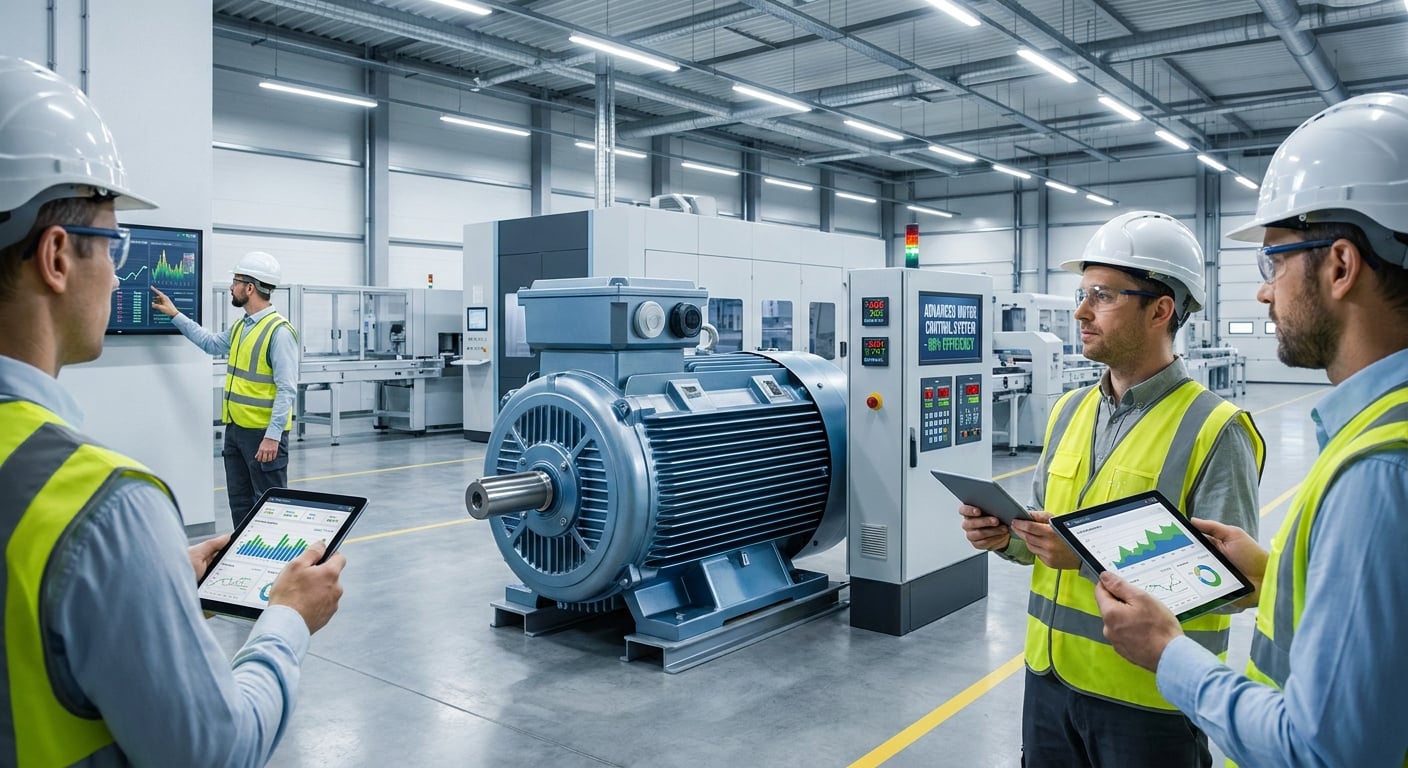
Electric motors are behind many processes that a e-commerce or B2B brand considers self-evident: conveyor belts in warehouses, pumps in production facilities, HVAC fans, packaging machines, robotic systems, automatic doors, sorters and fulfillment lines. The DesignNews article on asynchronous motors highlights something that is often left out of commercial strategy: motor selection is not just a technical decision, but a decision of cost, reliability, energy efficiency and business continuity. In a market where speed of delivery, low operating costs and stock predictability decide the profit margin, asynchronous motors, also known internationally as induction motors, are the foundation of industrial automation.
The reason why asynchronous electric motors remain so popular is simple: they are robust, relatively economical, have limited maintenance requirements and can operate reliably in demanding environments. Unlike more complex drive solutions, a classic squirrel cage motor does not need brushes or mechanical electrical contact on the rotor, so it reduces wear points. For an online store owner investing in their own warehouse or a B2B company selling industrial equipment online, understanding these fundamentals helps with better product content, more accurate technical filters, more correct supplier selection, and fewer returns due to incorrect sizing.
The energy strand is even more critical. According to the International Energy Agency, electric motor systems account for over 40% of global electricity consumption, and in industrial installations the share is even higher. This means that even small improvements in motor performance, motor speed control or maintenance can translate into significant cost reductions. As shown in the graph below, electric motors are not a peripheral technical issue; they are one of the largest consumers of electricity globally.
Share of electric drive systems in global electricity consumption
Source: International Energy Agency, Energy Efficiency Policy Opportunities for Electric Motor-Driven Systems
Electromotive systems40%
Other uses of electricity60%
How asynchronous engines work without excessive technical jargon
The operation of an asynchronous motor is based on a simple but powerful physical phenomenon: electromagnetic induction. The stator creates a rotating magnetic field, which “pulls” the rotor, inducing currents. These currents produce the torque that eventually turns the shaft. The “asynchronous” arises from the fact that the rotor does not rotate at exactly the same speed as the stator field: there is always a small slip, necessary to generate torque.
To make it even more practical: if the engine was completely “modern”, there would be no induction and no torque. This is why induction motors are so useful in applications where we want stable operation, high reliability and low complexity. With proper power selection (motor sizing) and the use of inverter VFDs, we can control speed and torque precisely, while reducing consumption and mechanical stresses.
Current applications: from conveyors to smart storage
In modern industry and supply chains, asynchronous motors cover a wide range of applications: conveyors, sorters, pumps, compressors, fans, packaging machines, CNC and many more. The advantage is that they can be easily scaled from small single-phase motors to large three-phase systems, and with drive technologies (VFD/ASD) the tuning becomes efficient.
For businesses that operate fulfillment or warehouses, reliability and uptime are critical. An outage on a conveyor line can cause delays in deliveries and increase labor costs. That's why proper motor selection and preventive/predictive maintenance strategy have a direct link to KPIs: orders per hour, SLA, returns, and energy cost per piece.
Step-by-Step guide to selecting an asynchronous motor for professional use
Engine selection is not “get a 2HP and be done with it”. To avoid oversizing (wasted energy/costs) or undersizing (overheating/damage), here are the basic steps:
- Set the load and starting torque (start torque): what the engine should move and at what inertia.
- Check the power supply: single/three phase, voltage, frequency.
- Prioritise performance: IE3/IE4 classes for lower lifecycle cost.
- See if you need VFD: for variable load and better control.
- Environmental conditions: temperature, dust, humidity, IP protection.
Especially in variable load applications (pumps/blowers), the VFD can dramatically reduce consumption, since the power in many cases scales non-linearly with speed.
Best practices for performance, uptime and lower operating costs
The most common “hidden” losses result from misalignment, worn bearings, misalignment, poor power quality and non-optimized operation. To reduce downtime and costs:
- Schedule maintenance based on operating hours and conditions.
- Use monitoring (vibration, temperature, current) for predictive maintenance.
- Check the drives: correct setting of ramps/limits reduces stress.
- Upgrade to more efficient classes when the ROI is obvious.
As the classic empirical observation in industry goes, the purchase cost of the motor is small compared to the life-cycle energy costs - that's why the ’cheap“ option often turns out to be expensive.
Future innovations: smart engines, efficiency and better B2B content
Trends show more sensor integration, better analysis of maintenance data and stricter requirements for energy efficiency. For producers/suppliers selling online, this means that product content must “speak” the language of engineering: performance, torque curves, VFD compatibility, operating conditions, and clear use cases.
In other words, asynchronous engines are still core technology, but their value is enhanced when combined with intelligent control, data and proper documentation. The real decision must combine performance, reliability, application, controllability, maintenance data and total life cycle cost. For e-commerce owners, especially in B2B or industrial verticals, this translates into a clear opportunity: better technical content, smarter categorization, selection tools and a commercial narrative that helps the customer buy right. When product content does the work of an engineering consultant, electric motors cease to be just SKUs and become a strategic, high-trust product.
Sources
Frequently Asked Questions (FAQs)
What are asynchronous electric motors and how do they work?;
Asynchronous electric motors, also known as induction motors, work by creating a rotating magnetic field that induces currents in the rotor, producing torque. They are robust, economical and require little maintenance, making them ideal for industrial applications.
Why are asynchronous motors important for e-commerce and industry?;
Asynchronous motors are used in applications such as conveyor belts, pumps and HVAC systems, which are critical to the automation and efficiency of logistics and warehouses. Choosing the right motor affects operating costs, reliability and energy efficiency.
How does the performance of electric motors affect energy consumption?;
Electric motors account for a large part of the world's energy consumption. Improvements in motor performance can significantly reduce energy costs, making them critical for businesses seeking to reduce operating costs.
What are the advantages of using VFD inverters in asynchronous motors?;
The use of inverter VFD allows the motor speed to be adapted to the needs of the application, reducing energy consumption and mechanical stress. This is particularly useful in variable load applications such as pumps and fans.
How can I choose the right asynchronous engine for my business?;
Choosing the right motor starts with determining the load and mechanical requirements of your application. Consider the power supply, speed, efficiency and need for inverter VFD, as well as the conditions of the installation environment.
What is the total life cycle cost of an electric motor?;
Energy costs can represent up to 97% of the total life cycle cost of an electric motor. This makes energy efficiency and proper operation vital to reducing overall costs.