With over 20 years of experience, we transform your digital presence. We specialize in website and E-Shop development, SEO and Digital Marketing, ERP software and smart automation that take your business to the next level.
Dell Technologies changes the rules in data storage modernization
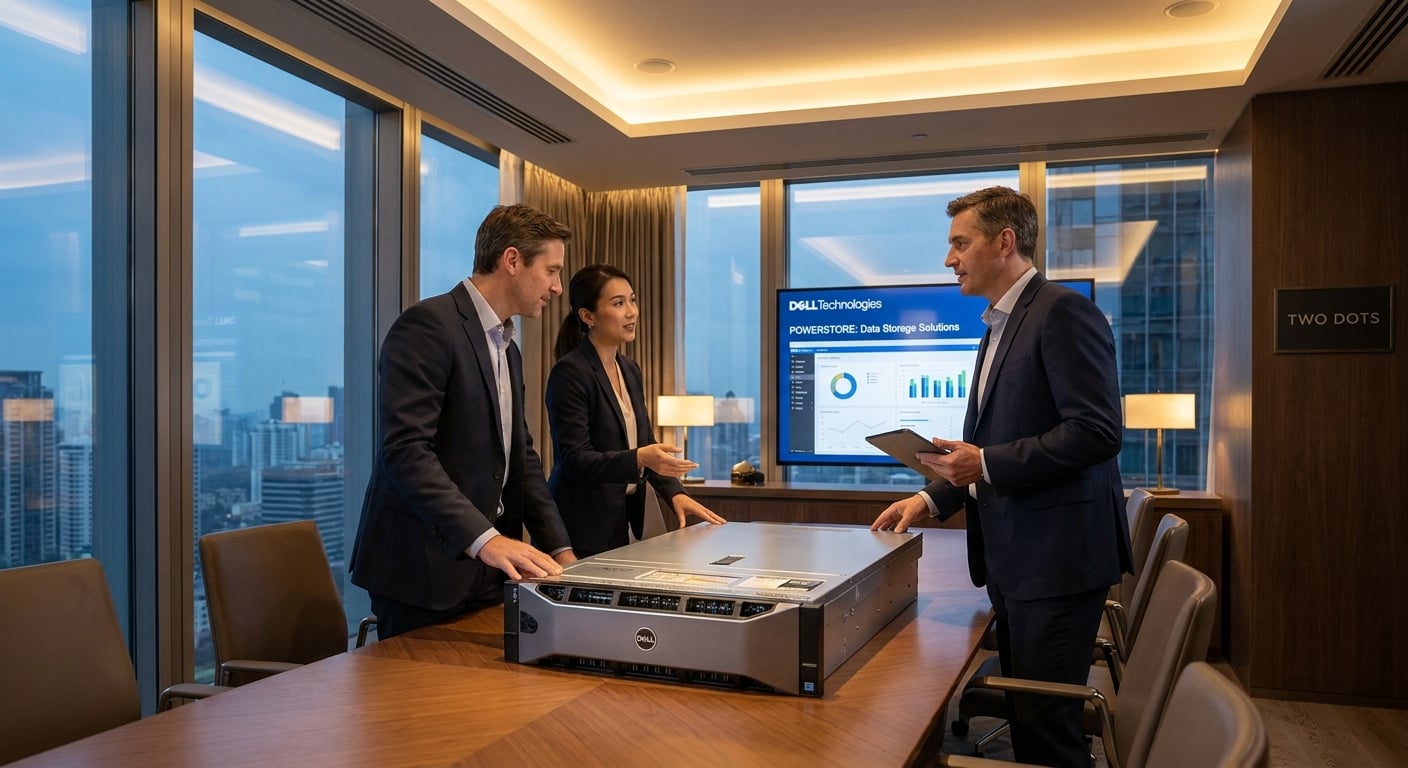
Dell Technologies" announcement titled "Dell Technologies Rewrites the Rules of Storage Modernization and AI Innovation" highlights the importance of data as a central growth engine for enterprises. Dell's new generation of infrastructure focuses on storage modernization, AI data platforms and hybrid cloud architectures, making AI infrastructure an essential tool for personalization, predictive analytics and real-time analytics. For online stores, the right database and secure access are critical to improving services and reducing business risk.
Dell Technologies“ announcement ”Dell Technologies Rewrites the Rules of Storage Modernization and AI Innovation“ is not just another technology update for enterprise storage. For an e-commerce owner, a digital director or a team building omnichannel experiences, the real issue is much more practical: data is becoming the central engine of growth, but at the same time it is becoming heavier, more dispersed and harder to manage. The new generation of infrastructure that Dell describes, with a focus on storage modernization, AI data platform, data protection and hybrid cloud architectures, points to a market where AI infrastructure is not a ”luxury" for large organizations, but a requirement for enterprises that want to leverage personalization, predictive analytics, service automation, product recommendations and real-time analytics without being locked into slow, expensive or insecure systems.
For online stores, the debate around AI infrastructure is not limited to which AI tool to use for product descriptions or campaigns. The critical question is whether the business has the right database, appropriate data storage, adequate data governance mechanisms and secure access to structured and unstructured data. An e-commerce platform generates data from searches, shopping carts, transactions, returns, reviews, images, logs, customer support tickets, ERP, CRM, marketplaces and social channels. If this data stays in isolated systems, AI cannot provide reliable answers. Conversely, when the infrastructure is designed correctly, the same information can be used for better demand forecasting, dynamic pricing, faster service and safer operations.
What Dell announced and why it concerns e-commerce
According to the Dell Technologies announcement, the company is expanding its strategy around modernizing storage and accelerating AI innovation by connecting solutions such as Dell PowerStore, Dell PowerScale, Dell ObjectScale and broader AI data platform architectures. The essence of the announcement is that storage is no longer viewed as a “file repository” but as an active layer that impacts application speed, AI model quality, data protection and business continuity. For a growing e-commerce brand, this translates into faster access to product data, better analytics support, more efficient image and video management, and more mature recovery capabilities in the event of a cyber-attack or system failure.
The interesting thing is that Dell isn't just talking about “more space”. It's talking about a more integrated approach, where enterprise storage, hybrid cloud, AI workloads and data protection must work as a single ecosystem. This has particular value for e-commerce businesses that start with a simple e-shop and gradually add ERP, WMS, PIM, CDP, marketing automation, BI dashboards and AI tools. Each new system creates data. Each new channel increases complexity. And every delay in data flow can mean a lost sale, wrong inventory or a bad customer experience.
The global growth of e-commerce further reinforces this need. As online sales increase, so does the volume of data that needs to be collected, cleaned, analysed and protected. As shown in the graph below, global retail e-commerce sales are moving upward, which creates greater demands on data infrastructure, speed and reliability.
Why storage modernization is becoming a strategic issue
Storage modernization is the transition from old, inflexible and often isolated storage infrastructures to more flexible, automated and resilient environments. In practice, this means that the business can manage different types of data, from transactional data to product images and customer support files, in a way that supports fast access, analytics and AI applications. For an e-commerce owner, the value is not in the technical jargon, but in the outcome: fewer bottlenecks, better data utilization and greater readiness to scale.
Most e-commerce projects start with a focus on the frontend: design, page speed, checkout, SEO, advertising. But as the business grows, the backend becomes the real limiting factor. If products don't sync properly with ERP, if images load slowly, if BI reporting is delayed, if campaigns are based on old data, or if customer service doesn't see the full customer picture, then development becomes expensive and unstable. Here AI infrastructure is directly linked to commercial performance: you can't have reliable e-commerce AI without reliable database and storage.
The trend is also clear in terms of global data volume. IDC has predicted that the global datasphere will grow from 33 zettabytes in 2018 to 175 zettabytes in 2025. This is not just about the big tech companies. Every e-shop that adds rich media, first-party data, event analytics, AI chatbots and personalized experiences is participating in this growth. The graph below captures the scale of the change.
Increasing Global Data Volume
Source: IDC Data Age 2025, Global Datasphere forecast
Global data volume (ZB)
2018
33 ZB
2025
175 ZB
From a business perspective, this increase means that data storage decisions should not be made solely on the basis of cost per terabyte. They must take into account speed of access, compatibility with analytics tools, scalability, level of automation, availability and protection against ransomware or leaks. Solutions such as Dell PowerStore, Dell PowerScale and Dell ObjectScale matter precisely because they address different storage needs: block, file and object storage, depending on the workload and data type. For a business that manages large product catalogs, media assets and behavioral data, this distinction is not a technical detail; it's a factor that affects day-to-day operations.
AI infrastructure: from “having data” to “creating value”
AI infrastructure is the set of technology layers that enables an enterprise to collect, store, process and utilize data for AI applications. It includes computing power, storage, network, data pipelines, security systems, governance tools and platforms that enable the training or use of AI models. In e-commerce, this can mean anything from simple applications, such as smarter product recommendations, to complex functions such as inventory forecasting by region, dynamic bundles, automated merchandising and real-time fraud detection.
The mistake many businesses make is that they start with the AI tool and not the data. They choose a chatbot, recommendation engine or generative AI application, but discover that product data is incomplete, attributes are not clean, customer segments are not synchronized, historical order data is fragmented or image files are not organized. At this point, AI infrastructure becomes the unseen success factor. If there is no reliable access to the right data, AI will produce mediocre, inaccurate or operationally dangerous results.
Dell Technologies' approach is interesting because it treats AI not as a single application, but as a total data architecture. An AI data platform must allow access to different sources, support unstructured data, integrate with existing enterprise systems and offer layers of protection. For an e-commerce brand, this means that data from CRM, ERP, site search, call center, marketplaces and social commerce channels can make common business sense. It's not enough to have multiple data points; they need to be available in the right place, with the right context and with controlled access.
A practical example: a retail chain with an e-shop wants to predict which products will be in high demand in the next 14 days. The model needs historical orders, returns, stock levels, seasonality, campaigns, competitor prices and perhaps external data such as weather conditions. If these are in different systems without a stable data pipeline, the forecast will be delayed or incomplete. But if there is a modern storage infrastructure and proper data governance, AI can work as a day-to-day business tool, not as an experimental project.
Security, data protection and business continuity
Data security is now a matter of commercial credibility. An e-commerce store that is cyber-attacked, loses access to orders or leaks customer data is not just facing a technical problem. It faces loss of trust, legal risk, delayed deliveries, increased service costs and a potential drop in repeat purchases. That's why data protection should be built into the design of the AI infrastructure from the beginning, not added on after the fact.
According to IBM, the global average cost of a data breach in 2024 was $4.88 million, while organisations that used extensive AI security and automation saved an average of $2.22 million compared to organisations that did not. For an e-commerce owner, these numbers serve as a reminder that data protection is not just compliance. It's a business risk reduction tool. The graph below shows the difference between the average breach cost and the reported savings from extensive use of security AI and automation.
Breach Cost and Savings from AI Security
Source:IBM Cost of a Data Breach Report 2024
Amount (USD million)
Average cost of breach
USD 4.88 million
Savings with AI security & automation
USD 2.22 million
Dell, through its overall storage modernization strategy, links performance with resilience. This is particularly important for businesses that operate 24/7, have seasonal peaks such as Black Friday and Christmas, or rely on international sales. The infrastructure must be able to withstand traffic growth, multiple systems reading and writing data, near real-time analytics and stringent recovery requirements. A simple backup is not enough if recovery is slow, if data is inconsistent or if the business doesn't know which systems need to be recovered first.
This is where the issue of the hybrid cloud comes in. Many businesses can't or don't want to move everything to the public cloud. Others need local control for sensitive data while using cloud services for analytics, marketing or international scaling. The right hybrid strategy allows the business to keep critical data where it makes sense, leverage cloud flexibility where needed, and maintain consistent security policies. For e-commerce organizations that combine physical stores, warehouses, marketplaces and D2C channels, this flexibility is often more realistic than a pure “cloud-only” or “on-premise-only” option.
Step-by-Step guide for e-commerce owners
Infrastructure modernisation does not have to start with a huge project. It can start with a systematic assessment of data, commercial objectives and risks. The goal is to connect technology with measurable business value: better customer experience, more accurate forecasts, faster decisions, reduced downtime risk and lower operational costs.
Frequently asked questions about AI infrastructure
Practical implementation steps
Step 1: Map your data. Record where products, orders, inventory, images, reviews, customer data, support tickets and analytics events are located. Note which systems are critical to sales and which ones produce unstructured data that is currently not being utilized. Step 2: Define the use cases. Don't start by saying “we want AI.” Start with specific scenarios, such as reduced stockouts, better site search, automatic product categorization, personalized recommendations, fraud detection or return prediction. Step 3: Evaluate your existing storage infrastructure. Check if the data storage can support speed, availability, scalability and secure access for your chosen use cases. Here solutions such as Dell PowerStore, Dell PowerScale or Dell ObjectScale correspond to different needs and should be evaluated based on workloads, not on a general technical preference.
What is storage modernization and why is it important for e-commerce?;
Storage modernization refers to upgrading legacy storage infrastructure to more flexible and resilient systems. For e-commerce, this means better data management, faster access and support for AI applications that improve the customer experience.
How does AI infrastructure affect the development of an e-commerce store?;
AI infrastructure enables reliable data collection and analysis, leading to better demand forecasts, personalized experiences and improved business processes. This boosts the competitiveness and efficiency of an e-commerce store.
What are the benefits of hybrid cloud for e-commerce businesses?;
The hybrid cloud offers flexibility, allowing critical data to be stored locally while using cloud services for analytics and international scaling. This helps address seasonal spikes and maintain consistent security policies.
What is Dell Technologies' role in storage and AI for e-commerce?;
Dell Technologies provides solutions such as Dell PowerStore that incorporate storage modernization and AI innovation. These solutions support businesses to improve data access speed and protection, enhancing business continuity.
How can an e-commerce business start upgrading its infrastructure?;
An enterprise can start by mapping its data, assessing its existing storage infrastructure and defining specific use cases. Investing in the right infrastructure and data governance is the first step to effectively leveraging AI.
Want to leverage AI infrastructure without risking downtime or security?;
Talk to us about data architecture, ERP/CRM connections, automation and e-commerce infrastructure that scales: Contact.