Electric Cars, Lexus ES, Automotive Retail, Customer Experience, Omnichannel
What Lexus ES reveals about electric cars
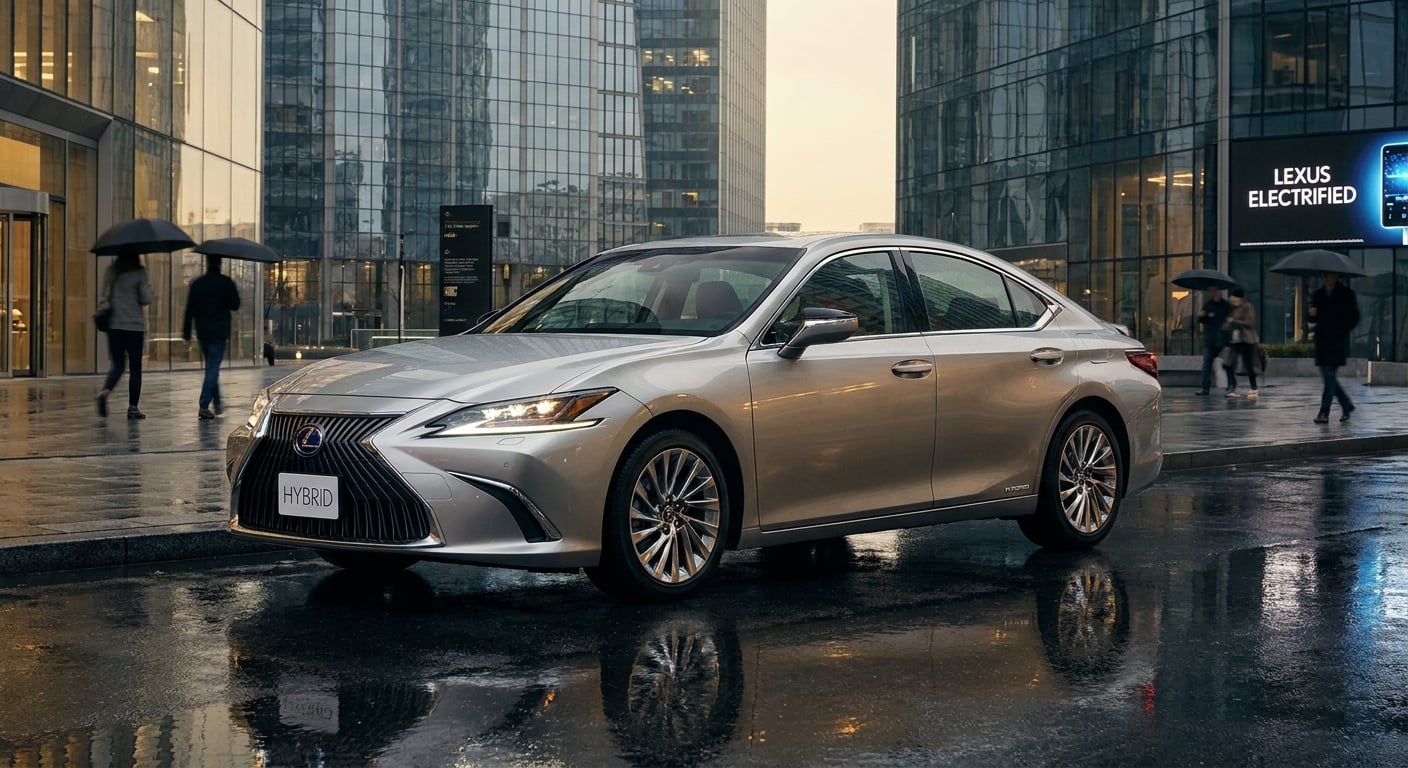
The DesignNews article on the new Lexus ES sheds light on a topic that goes far beyond the boundaries of the automotive industry: how a mature premium brand is trying to deliver the same customer experience across two different technological architectures, hybrid cars and electric cars. The challenge is not just to put a battery in a sedan or change the engine. It's to maintain Lexus' sense of comfort, quietness, ride quality, spaciousness, safety and commercial promise, while behind the same model name coexist different packaging, cooling, weight, rigidity and cost requirements.
For an e-commerce owner, this example has particular value. The Lexus ES is not just a story of engineers trying to solve complex technical problems. It's a lesson in product strategy, positioning and customer education. As electric cars become mainstream, consumers aren't just buying technical features. They are buying confidence, reliability, ease of charging, lower user stress and an experience that must be consistent from the first Google search through test drive, online configuration, financing and after-sales. In other words, engineering complexity must be turned into a simple, clear and compelling commercial narrative.
In the case of the Lexus ES EV and hybrid versions, Lexus is attempting to serve two types of customers: those who want the familiar transition via hybrid technology and those who are ready for a fully electric sedan. This is critical, because the market doesn't move at one speed. There are drivers who value autonomy, others who are concerned about charging infrastructure, others who want a lower total cost of ownership, and others who want the quiet, instant response that EVs offer. For brands and retailers, the message is clear: when the product becomes more complex, the digital content, UX and marketing communications need to become simpler.
The technical challenges behind a hybrid and electric sedan
According to the DesignNews analysis, Lexus engineers were challenged to tackle the difficult combination of two worlds: a sedan that must remain comfortable, premium and practical, but at the same time support hybrid and electric design logic. In a conventional or hybrid car, the thermal engine, transmission, exhaust system, fuel tank and auxiliary systems occupy specific zones in the body. In an EV, the electric car battery requires a large, flat and protected space, usually low to the floor, while the electric motor, inverters, charging system and thermal battery management create new requirements.
This packaging is more of a commercial issue than it seems. If the electric vehicle platform reduces rear passenger space, increases seat height excessively, or affects the luxury feel, the customer will not talk battery architecture. They will simply say that the car «doesn't fit». Similarly, if an electric sedan has good range but a poor charging experience, product perception is downgraded. This is a lesson for any online store as well: the customer does not evaluate your internal systems, ERP, logistics stack or payment gateway. They are evaluating whether the purchase is completed quickly, whether the information is clear and whether the product they receive lives up to the promise.
This explains why a premium brand like Lexus can't approach the EV as a simple engine change. The experience has to be cohesive. The customer expects quietness, quality, stability, convenience and a sense of control. Similarly, an e-commerce brand owner selling high-value products must ensure that the website, checkout, content, photos, reviews, emails and customer support don't function as isolated segments, but as a unified experience. Lexus is trying to make engineering invisible to the driver. A mature e-commerce brand should do the same with its technology.
Why the market is pushing brands to plan a dual strategy
The rise of EVs is not theoretical. International Energy Agency figures show that global electric car sales have increased from around 3 million in 2020 to over 17 million in 2024. This means that electric cars are no longer just for early adopters or small niche markets. They are about mass consumers comparing models, prices, subsidies, charging, financing and resale value. As shown in the graph below, the growth curve creates pressure on brands to evolve their products quickly, but without losing the credibility of the experience.
{ “type”: “line”, “title”: “Global Electric Car Sales”, “subtitle”: “Source: IEA Global EV Outlook 2025, Global Electric Car Sales”, “labels”: [“2020”, “2021”, “2022”, “2023”, “2024”], “datasets”: [{ “label”: “Sales”, “data”:[3.0, 6.6, 10.0, 14.0, 17.0], “unit”: “million vehicles” }], “colors”: [“#FCA311”, “#030633”, “#E5E5E5”] } }
But growth is not uniform. The IEA reports that in 2023 about 38% of new car registrations in China were electric, in Europe the corresponding figure was about 21%, while in the United States about 10%. For Lexus and every international brand, this means that the same technology has to be presented differently per market. In a country where charging is more mature and acceptance is higher, the message can focus on performance and the premium EV lifestyle. In a market where range anxiety still exists, the communication needs to explain in a simple way about autonomy, charging, warranty, travel use and overall cost.
{ “type”: “bar”, “title”: “Share of electric in new registrations by region”, “subtitle”: “Source: IEA Global EV Outlook 2024, 2023 data”, “labels”: [“China”, “Europe”, “United States”], “datasets”: [{ “label”: “Share of new registrations”, “data”: [38, 21, 10], “unit”: “%” }], “colors”: [“#FCA311”, “#030633”, “#E5E5E5”] }
The charging infrastructure is equally critical. According to the IEA, public chargers worldwide increased from about 1.3 million in 2020 to about 4 million in 2023. This data explains why charging infrastructure should be treated as part of the product experience rather than an external factor. When a consumer considers an electric sedan, they are not just thinking about horsepower or acceleration. He's thinking about whether it can charge at home, at work, on a trip, on a public grid, and at what cost. As the graph below shows, the infrastructure is growing rapidly, but the need for clear information remains critical.
{ “type”: “line”, “title”: “Global Public EV Chargers”, “subtitle”: “Source: IEA Global EV Outlook 2024, public charging points worldwide”, “labels”: [“2020”, “2021”, “2022”, “2023”], “datasets”: [{ “label”: “Public Chargers”, “data”:[1.3, 1.8, 2.7, 4.0], “unit”: “million points” }], “colors”: [“#030633”, “#FCA311”, “#E5E5E5”] } }
What this means for e-commerce owners and digital teams
The key conclusion for e-commerce professionals is that technological change does not sell itself. It must translate into clear benefits, reduced risk and a better buying experience. Lexus, through the new ES, is challenged to explain why a driver should choose a hybrid, why they should choose an EV, what the differences are in everyday life and how the premium promise remains the same regardless of powertrain technology. The same is true in any market where the product has technical complexity: electronics, B2B equipment, SaaS, energy systems, premium fashion with sustainability claims, smart home products or health and wellness products.
The first practical application is to create content that responds to real customer objections. In electric cars, these are autonomy, battery life, charging, price, service and resale value. In an e-shop, the corresponding objections might be sizing, warranty, delivery times, compatibility, returns and support. If the content is limited to technical specs, the customer is forced to do the translation himself. But if the content links each feature to a practical benefit, the likelihood of conversion increases.
The second application is segmentation. There is no single customer for electric cars. There is the tech-savvy driver who compares batteries and platforms, the family man interested in safety and cost of ownership, the professional considering corporate leasing, and the premium buyer seeking comfort and status. Similarly, an e-commerce brand needs to build landing pages, email flows and product pages around different search intent. One type of content is needed for someone searching «what is an EV», another for someone comparing «Lexus ES EV vs hybrid», and another for someone ready to request a quote.
The third application is omnichannel automotive retail as a model for each industry. Traditionally, automotive shopping was done in a physical store, but today the customer starts with search, reviews, video, configurator, finance calculator and social proof. This automotive customer experience is a useful model for e-commerce brands that want to unite website, physical showroom, phone sales, live chat, email and remarketing. The more expensive or complex the product, the more important it is to not break the experience into isolated touch points.
Step 1: Map the customer's real questions before writing any sales message. In the case of EVs, the questions are practical: how far it goes, how fast it charges, how much it costs to charge, what happens in the winter, how long the battery lasts, and whether service is available. For your e-commerce brand, create a list of the 20 most frequently asked questions that support, salespeople, and customer feedback receive. This list should become the basis for product content, FAQs, blog posts, comparison pages and email automation.
Step 2: Turn technical features into commercial benefits. Don't just say «thermal battery management». Explain that it helps stable performance and battery protection in different conditions. Don't just say «improved car NVH». Explain that the driver enjoys a quieter cabin and less fatigue on long journeys. In e-commerce, don't just say «durable material» or «advanced algorithm». Say what that means in terms of durability, comfort, time savings or risk reduction.
Step 3: Create comparison content for different levels of intent. For Lexus, a useful piece of content would be «Hybrid or electric Lexus ES: which one fits your everyday life?» For an e-shop, the equivalent might be «basic or premium package», «size A or size B», «subscription or one-time purchase». Comparisons reduce uncertainty and work great in SEO because they answer long-tail searches with higher purchase intent.
Step 4: Build landing pages around use cases and not just around categories. Electric cars should not only be presented as a technical category, but as a solution for commuting, corporate fleets, family use, travel or premium daily commuting. Similarly, an e-commerce brand can organize content based on the customer's problem: «for small spaces», «for professional use», «for beginners», «for gifting», «for high endurance». This approach connects the product with real context and improves both SEO and conversion rate.
Step 5: Embed social proof in a way that solves objections. Reviews shouldn't just be decorative. If a customer is afraid of autonomy, they need real-world driver experiences. If he fears quality, he needs long-term reviews. If he fears compatibility, he needs photos, videos and app guides. In e-commerce, organize reviews by topic: quality, delivery, fit, support, value for money. This makes social proof a sales tool, not just a number of stars.
Step 6: Measure the content as you would measure a product. Track which pages reduce support tickets, which increase add-to-cart, which lead to higher order value, and which best support remarketing. Lexus can measure interest in hybrid versus EV, test drive requests, configurator completions and lead quality. An e-commerce brand can measure scroll depth, clicks on size guide, comparison table usage, conversion from FAQ, checkout abandonments and returns per product. The bottom line is the same: content is not a cost of production. It's part of the sales system.
The new Lexus ES shows that the transition to electric cars is not just about technology. It is a strategic exercise in confidence. Engineers have to solve issues of weight, battery, thermal efficiency, rigidity and aerodynamics. Marketers must solve issues of understanding, objections, expectations and market experience. E-commerce owners can draw a very practical conclusion: the more complex a product becomes, the more value is placed on pure information. Technical excellence wins attention, but a simple, consistent and reliable experience wins the sale.
Sources:
Frequently Asked Questions
Packaging, battery, aerodynamics and NVH
The biggest difficulty in EV design is not a single component, but the interdependence of all systems. EV aerodynamics affects the autonomy, but also the aesthetics. Battery thermal management affects performance, battery life and stability at different temperatures. Regenerative braking improves energy recovery, but must be set up so that the driver feels natural deceleration. Car NVH, i.e. noise, vibration and harshness, takes on new importance in electric cars because the absence of a thermal engine makes tire, air, suspension and body sounds more prominent.
What is Lexus' strategy with the new ES for electric cars?;
Lexus strives to offer the same premium customer experience for both hybrid and electric cars. The goal is to maintain comfort and quality while the different technologies coexist in the same model.
What are the main challenges in designing an electric sedan like the Lexus ES?;
The challenges include integrating the battery and electric motor without compromising comfort and a sense of luxury. Aerodynamics, thermal management and NVH are critical to maintaining the overall driving experience.
How does the growth of the electric car market affect Lexus' strategy?;
The rapid growth in electric car sales is pushing Lexus to evolve its products quickly. The strategy includes adjusting communications according to the maturity of each market and the development of charging infrastructure.
What are the key needs of consumers buying electric cars?;
Consumers are looking for reliability, ease of charging and reduced stress of use. They are interested in autonomy, battery life, and quality of the driving experience.
How can an e-commerce brand benefit from Lexus' EV experience?;
An e-commerce brand can learn to simplify the complexity of the product and focus on the real benefits for the customer. Creating content that answers customers' questions and objections is vital.
Why is omnichannel retail important for selling electric cars?;
Omnichannel retail enables a unified customer experience from search to purchase. It is critical for addressing product complexity and building consumer trust.